Showing posts with label 1928. Show all posts
Showing posts with label 1928. Show all posts
Friday, July 4, 2014


Sunday, April 6, 2014
Full Fashioned Silk Hosiery - 1928
These were offered through the Gorcy Embroidery Journal- a monthly catalog from a Montreal based department company. This ad was in the August 1928 edition, so these fetching stockings would have been perfect for the daring flappers out there. They needed that "extra-wear" patch on the toe.

Saturday, February 22, 2014
Two Beautiful Bird Cushions - Gorcy Catalog, 1928
Hot-iron transfer patterns from the 1928 Gorcy Catalog. Because this was a Canadian company several of the ads are in English and French.
You could also get this image hand painted on ecru or black satin. Yes please!

Friday, February 21, 2014
New and Attractive - The Japanese Design
This is one offering from the August 1928 Gorcy catalog. Gorcy was based in Montreal and many of the ads are in French and English. This one caught my eye because I haven't seen a Sewing Machine Scarf or one for a Phonograph. These were stamped patterns that came on different fabrics (at different prices) . Then you could buy cotton or silk embroidery floss 'make the article'. In 1925 Emile Gorcy patented his Transfer Ink with mutton fat as the main ingredient.
In 1925 Emile Gorcy patented his Transfer Ink with mutton fat as the main ingredient.
"Be it known that I, EMILE Gorcy, a citizen of the French Republic, residing at Montreal, Province of Quebec, Canada, have invented certain new and useful Improvements in Transfer Ink...This transfer ink is formed of the following ingredients, preferably combined in the proportions indicated, namely: mutton fat,49 parts; black soap. 14 parts; and aniline coloring, 7 parts."
Friday, January 25, 2013
Vogue Book of Practical Dressmaking - 1928 Part 2
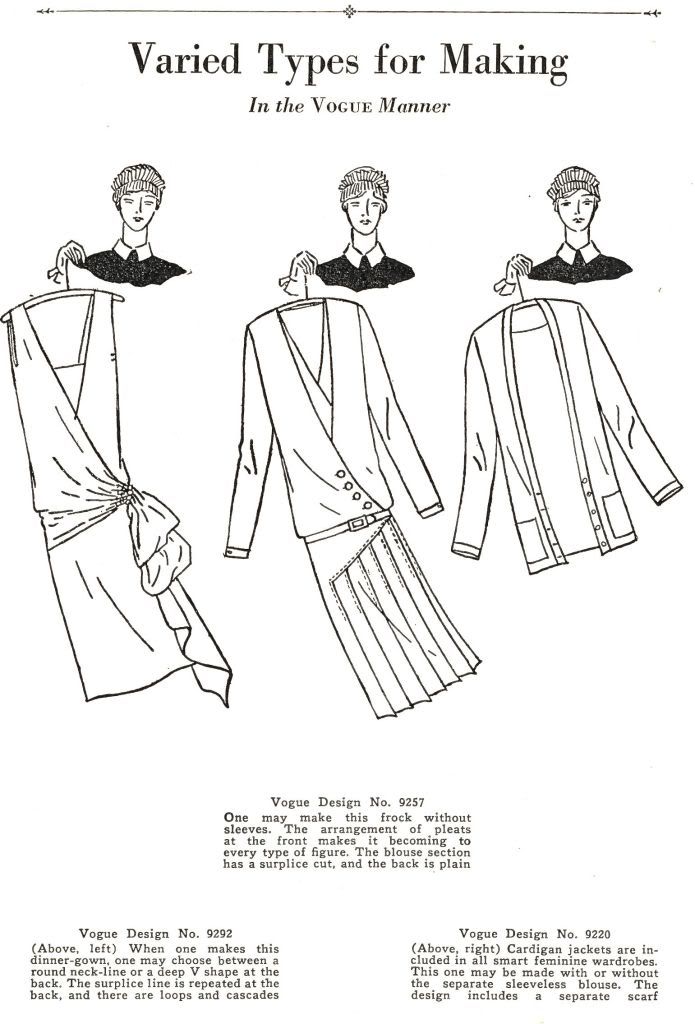
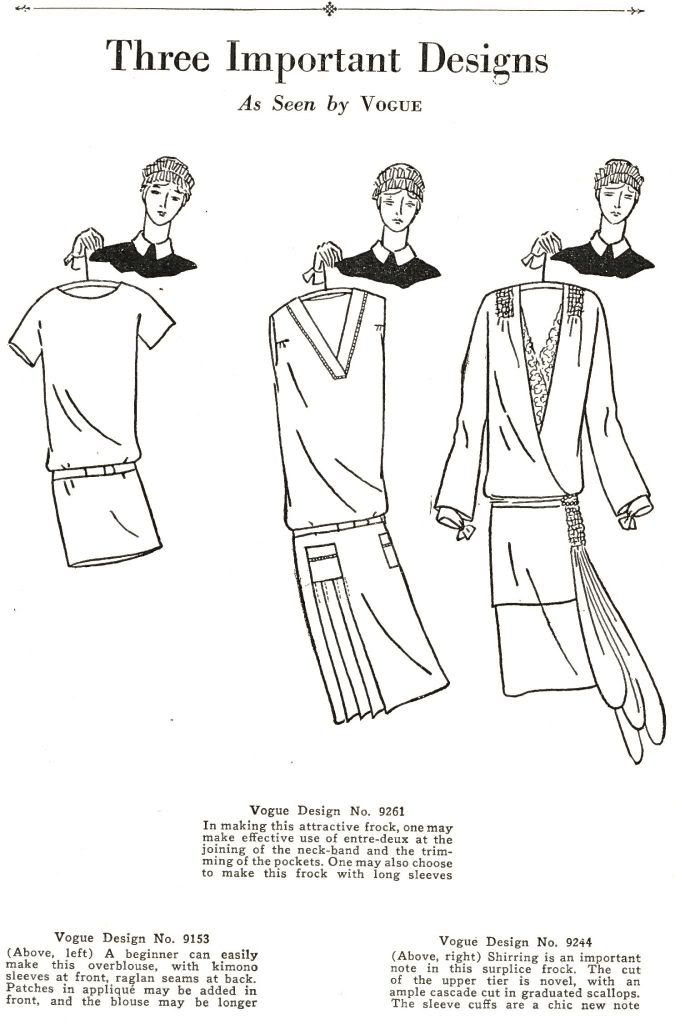
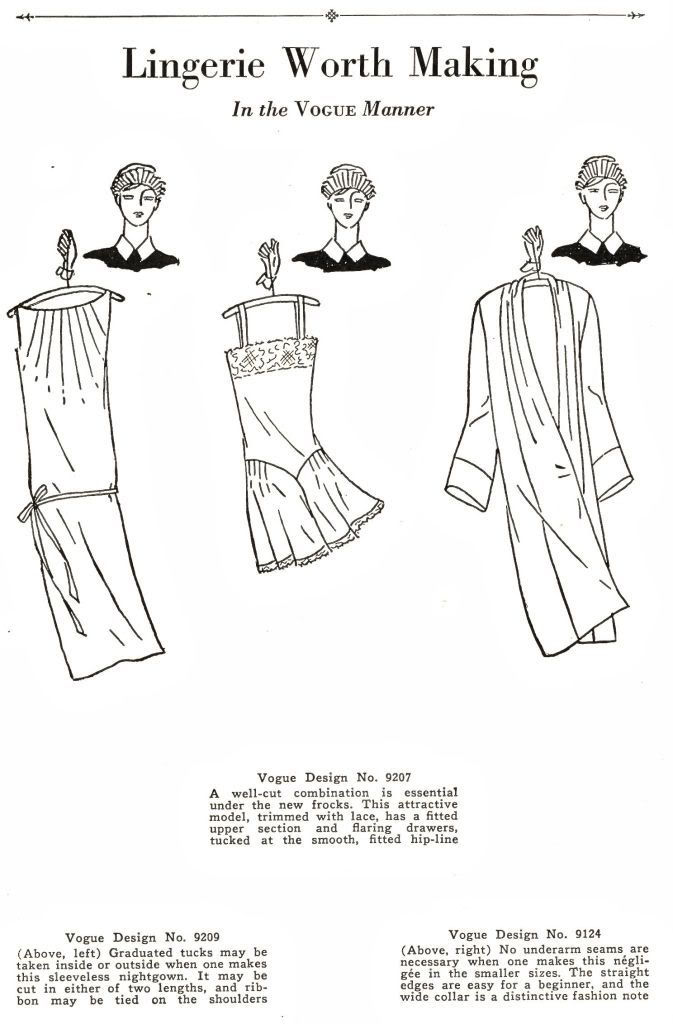
More from this 1928 booklet Vogue Book of Practical Dressmaking. These are some fashion choices in the "Vogue Manner". Look at the differences, we usually just think of the flat beaded flapper dress, but of course women had many more wardrobe options. There were Varied and Important Designs and Lingerie Worth Making!
Thursday, January 24, 2013
Vogue Book of Practical Dressmaking - 1928
This little sewing instruction book put out by Vogue in 1928 has lots of goodies, but let's start with the ads.


Monday, July 4, 2011
Friday, November 12, 2010
Dressmaking Made Easy - 1928 - Altering Patterns Part 3
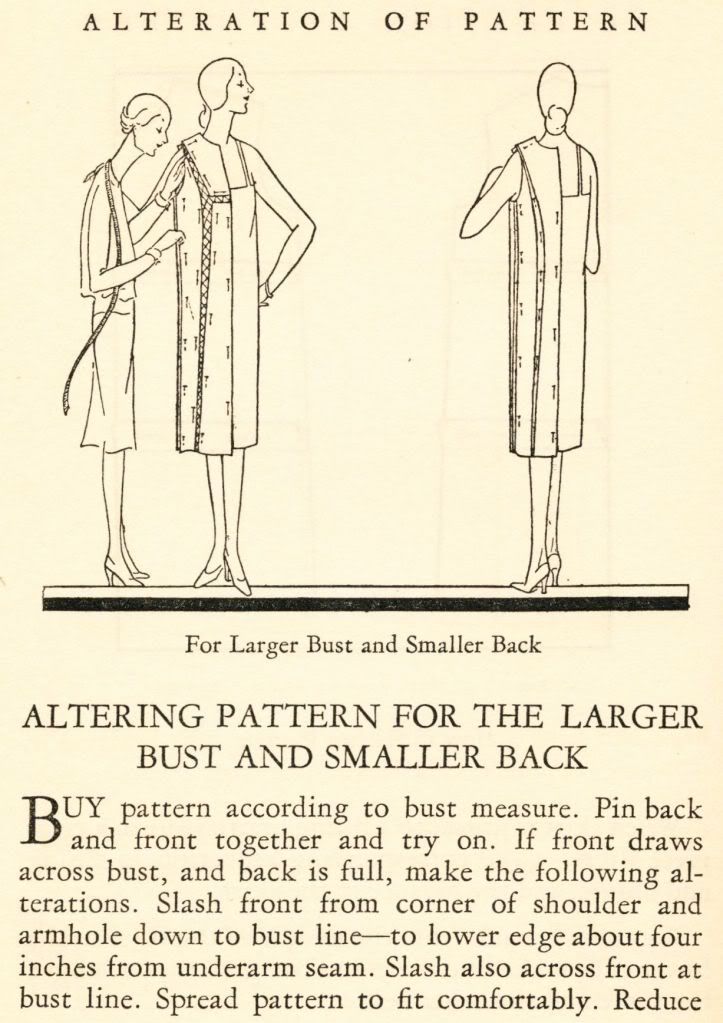
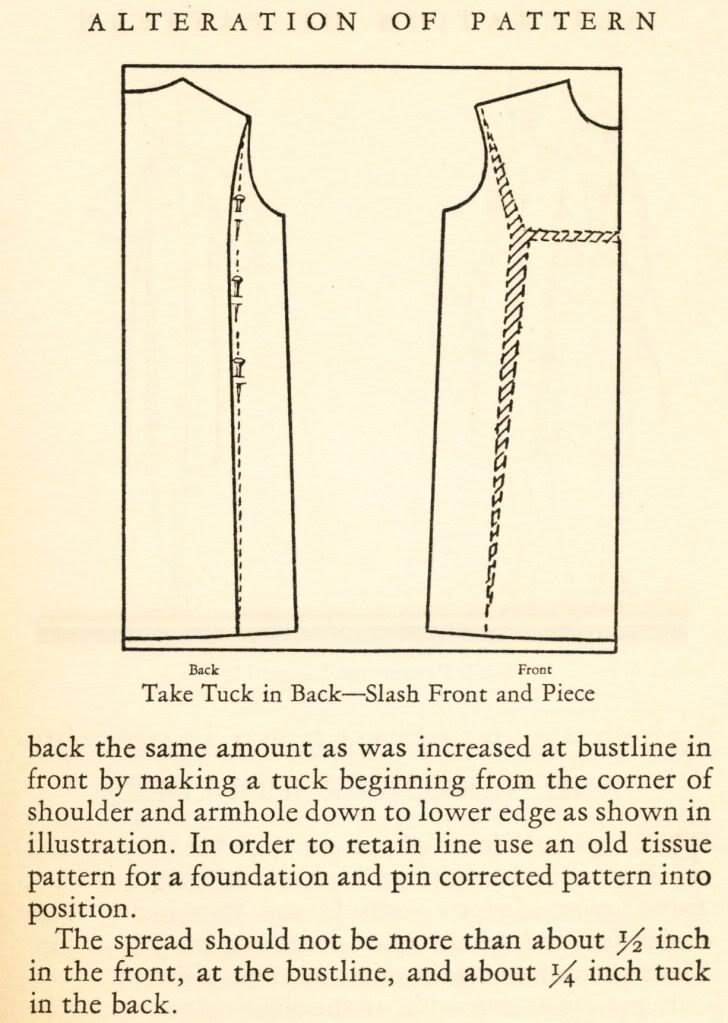
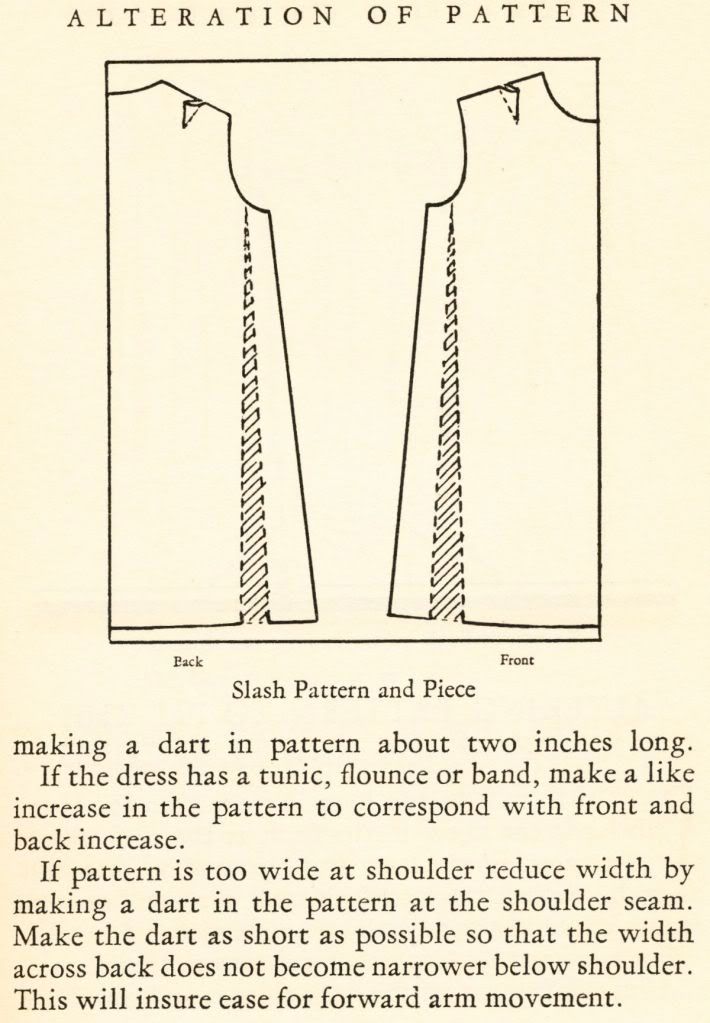
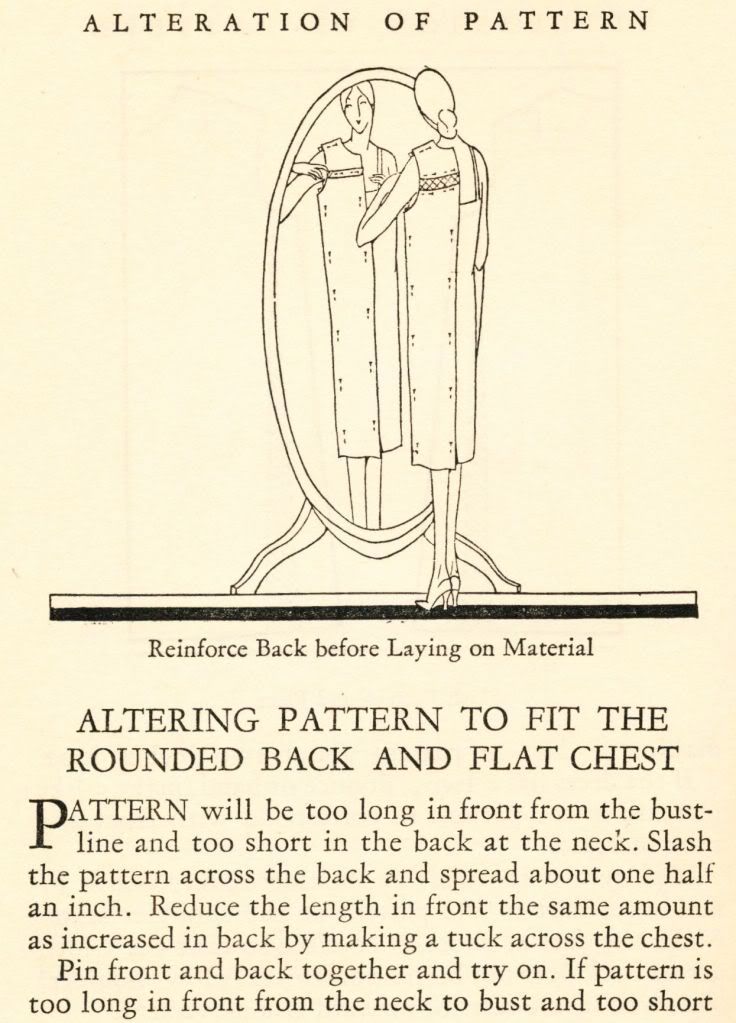
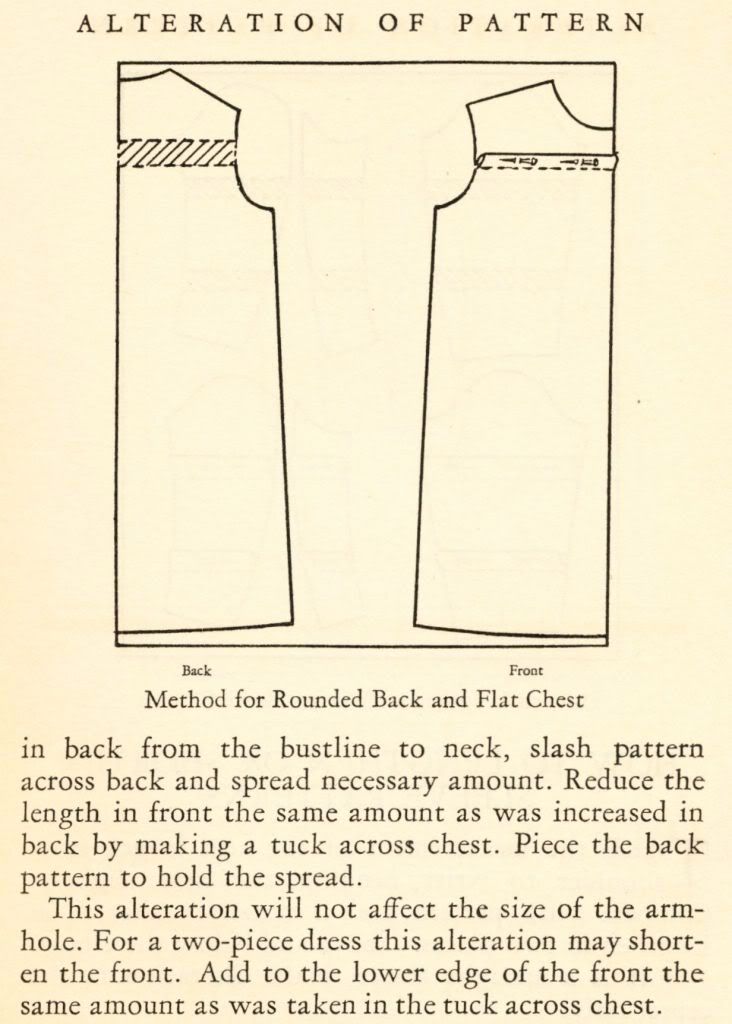
More altering patterns, for "Prominent Abdomen, Larger Bust, Smaller Back, Larger Hip, Narrower Shoulders, Rounded Back, and Flat Chest". That should cover everything!


Thursday, November 11, 2010
Dressmaking Made Easy - 1928 - Altering Patterns Part 2
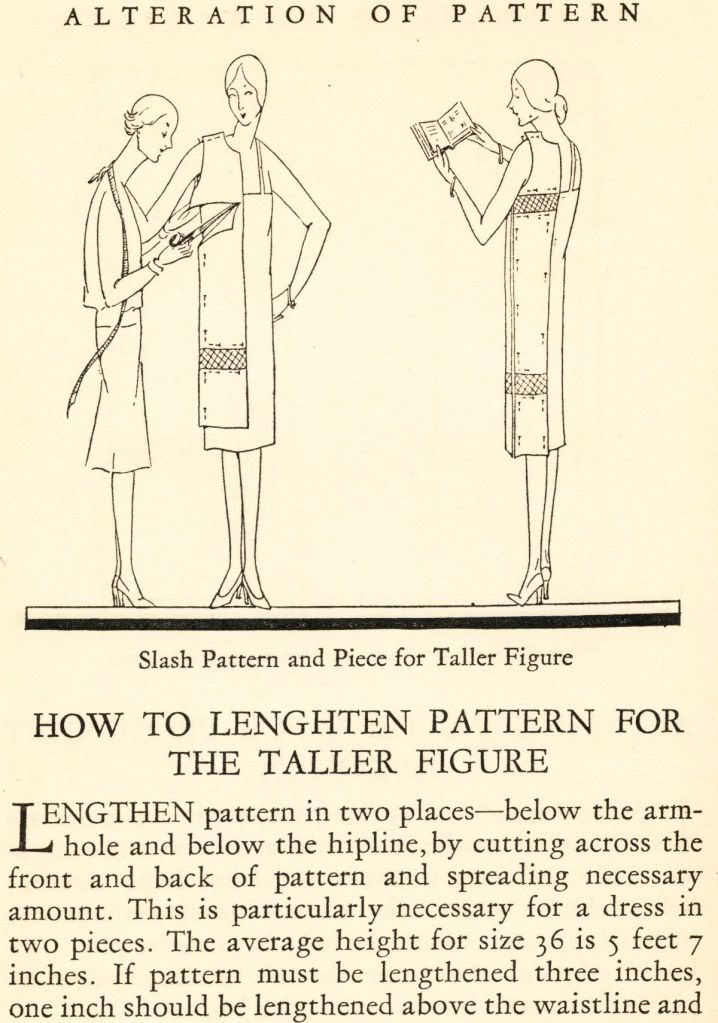
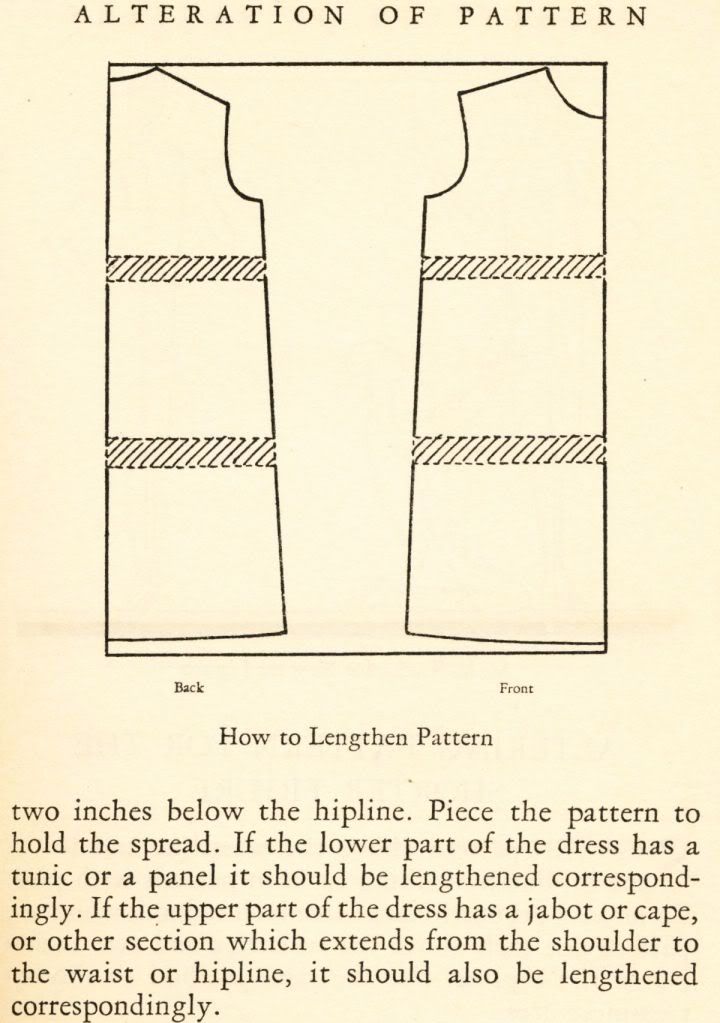
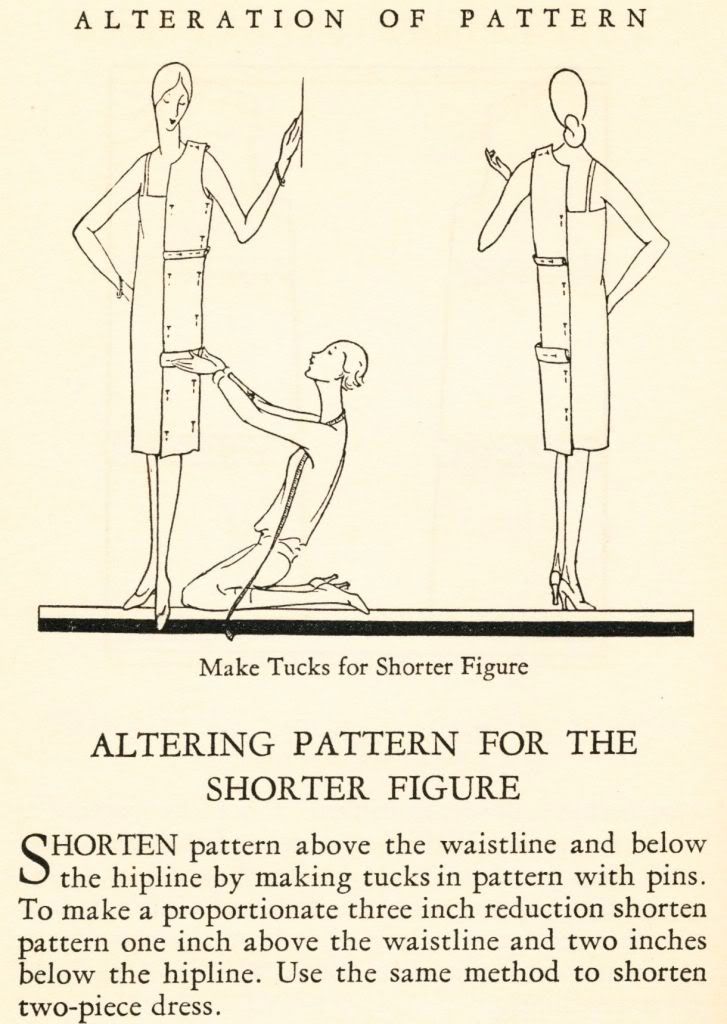
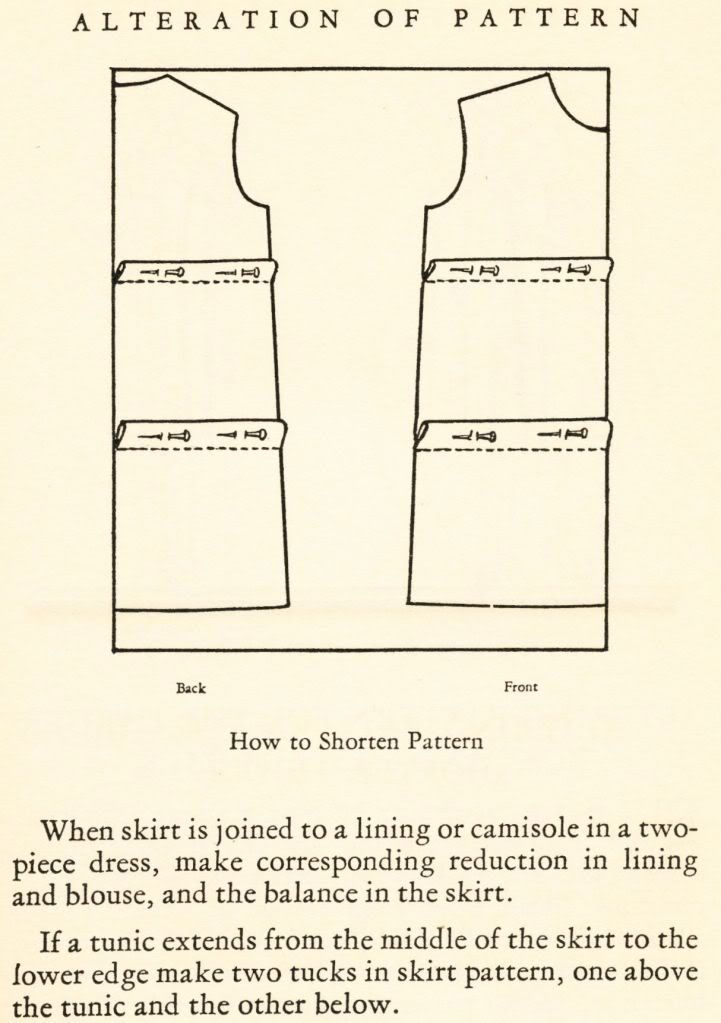
Today we learn how to alter patterns for the taller or shorter figure, but you still must be shaped like Olive Oyl!
Wednesday, November 10, 2010
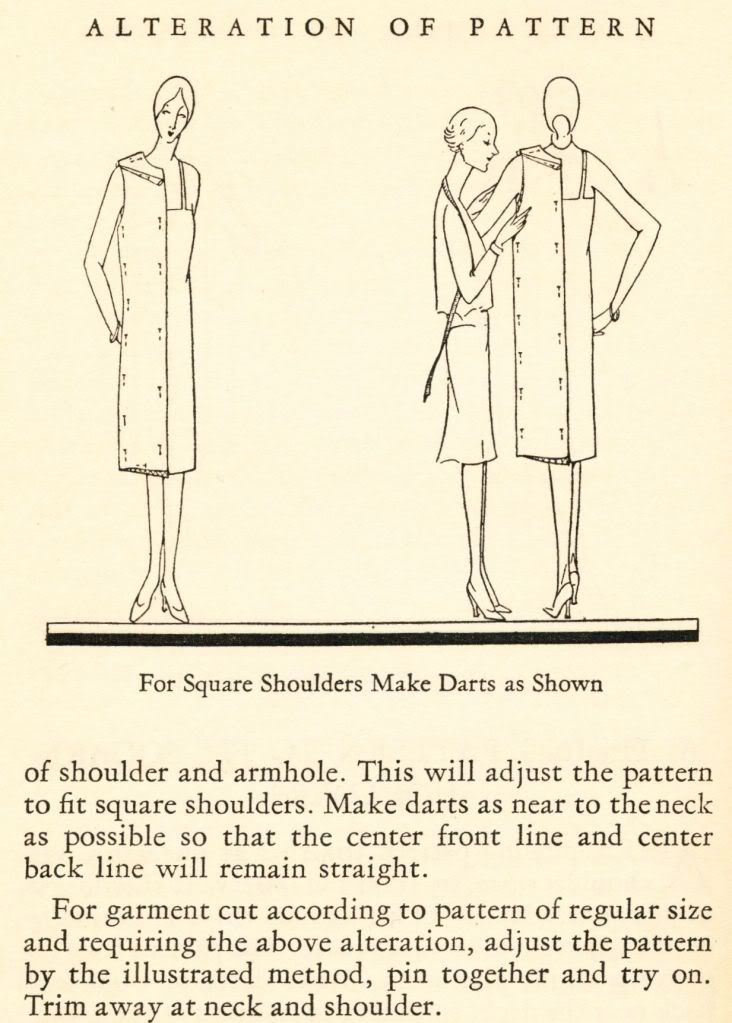
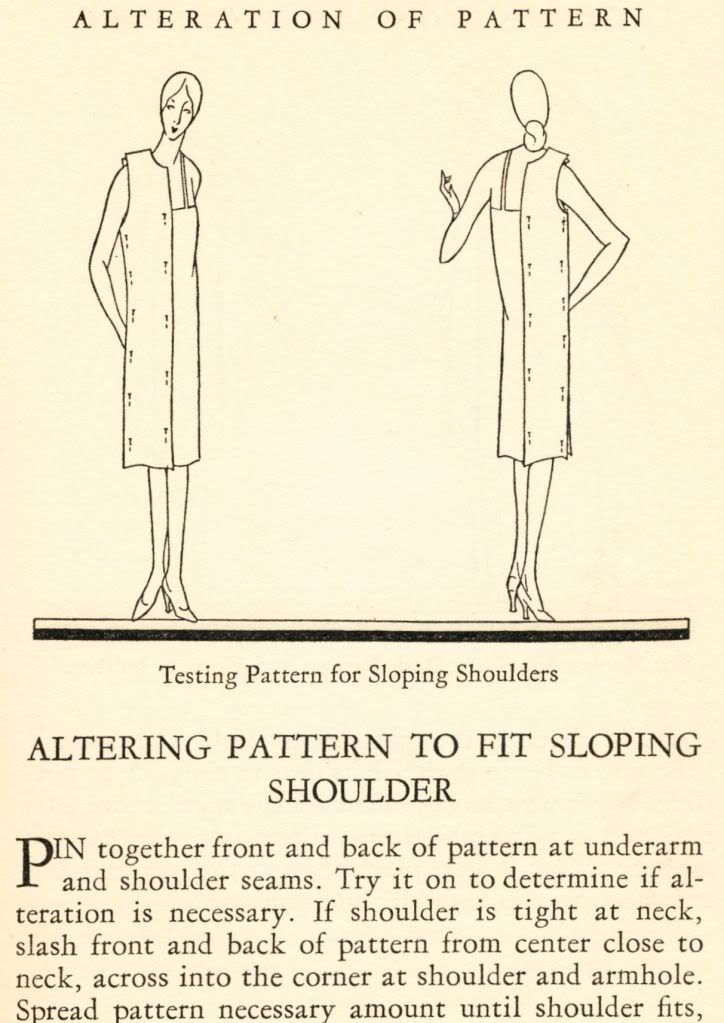
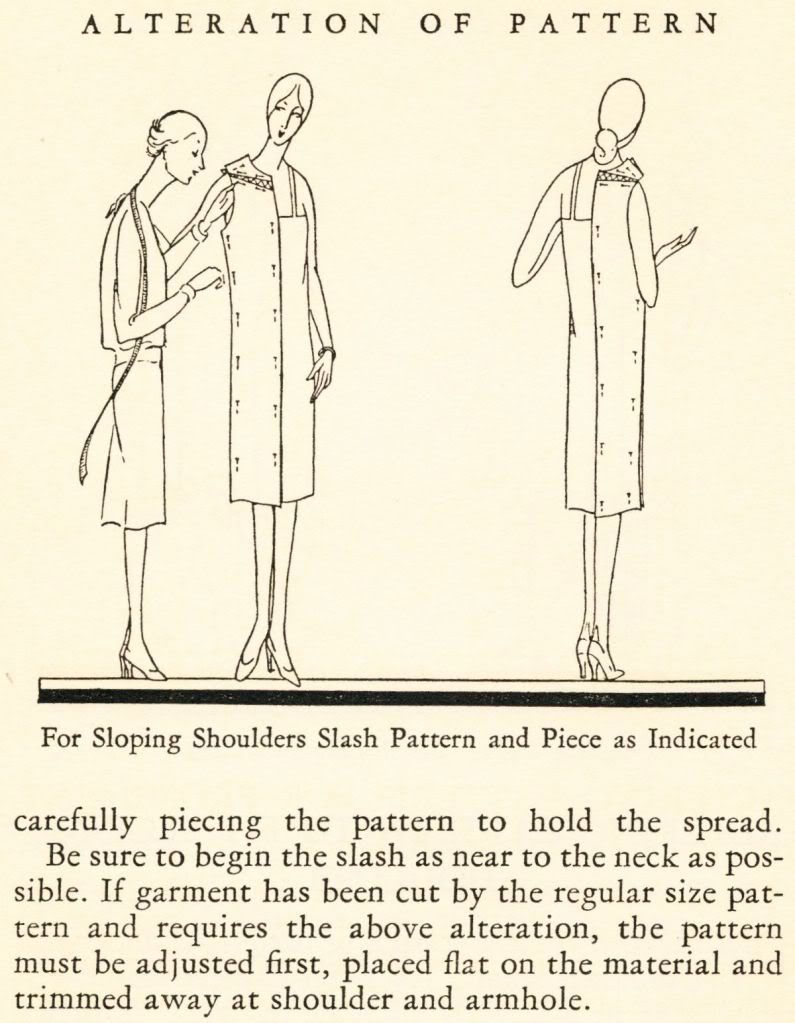
Dressmaking Made Easy - 1928 - Altering Patterns Part 1
Here is the complete how-to of altering your patterns if you happen to be a tall skinny gal in 1928 with square or sloping shoulders.

Sunday, November 7, 2010
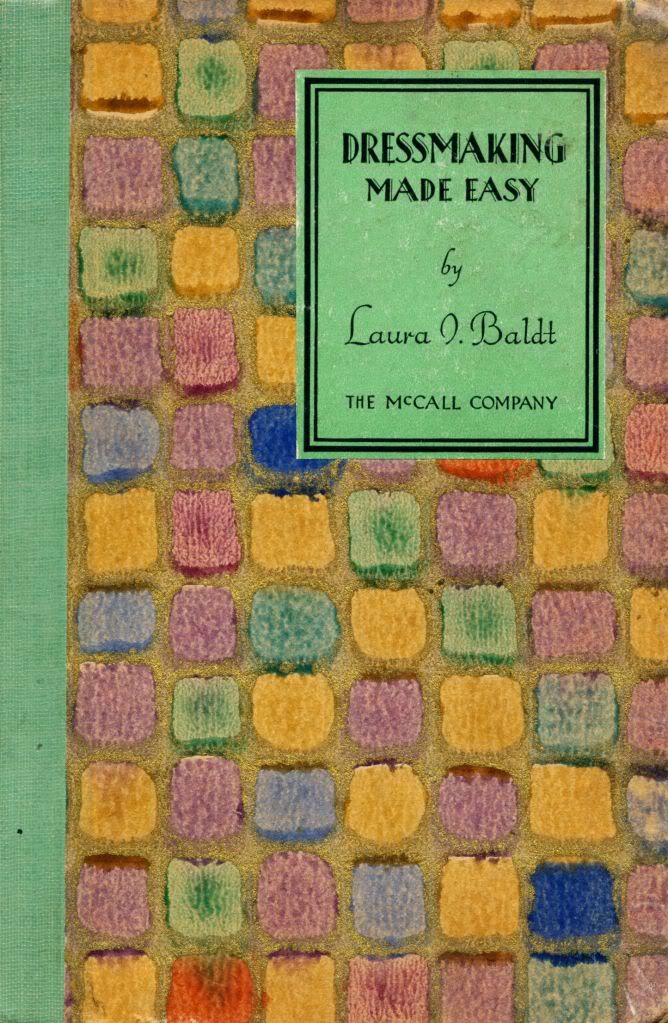
Dressmaking Made Easy - by Laura Baldt - 1928 - McCall Company
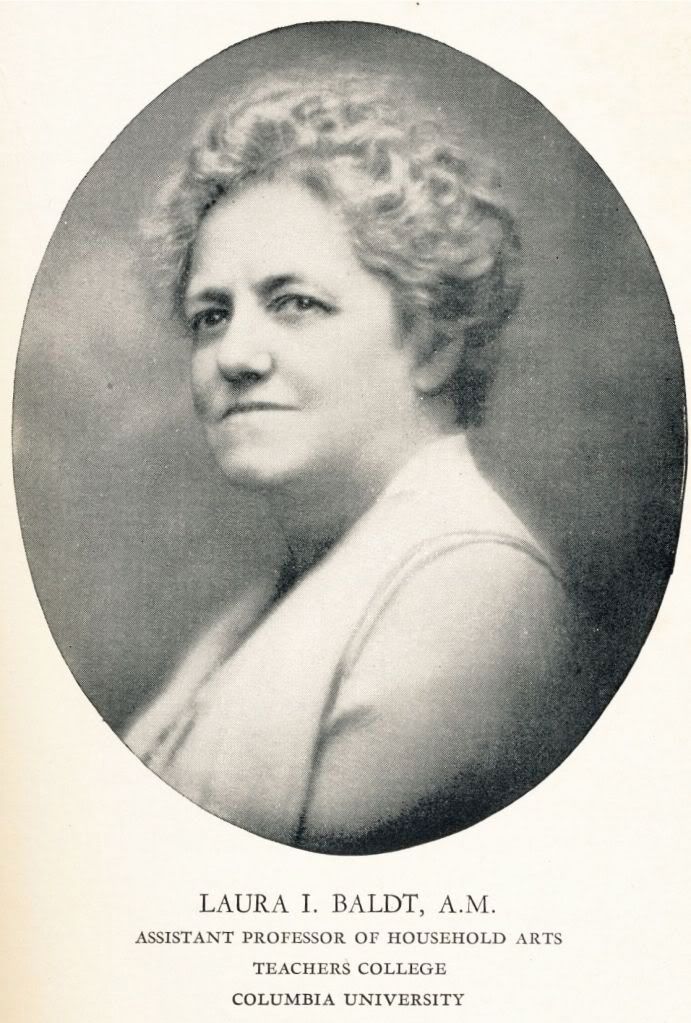
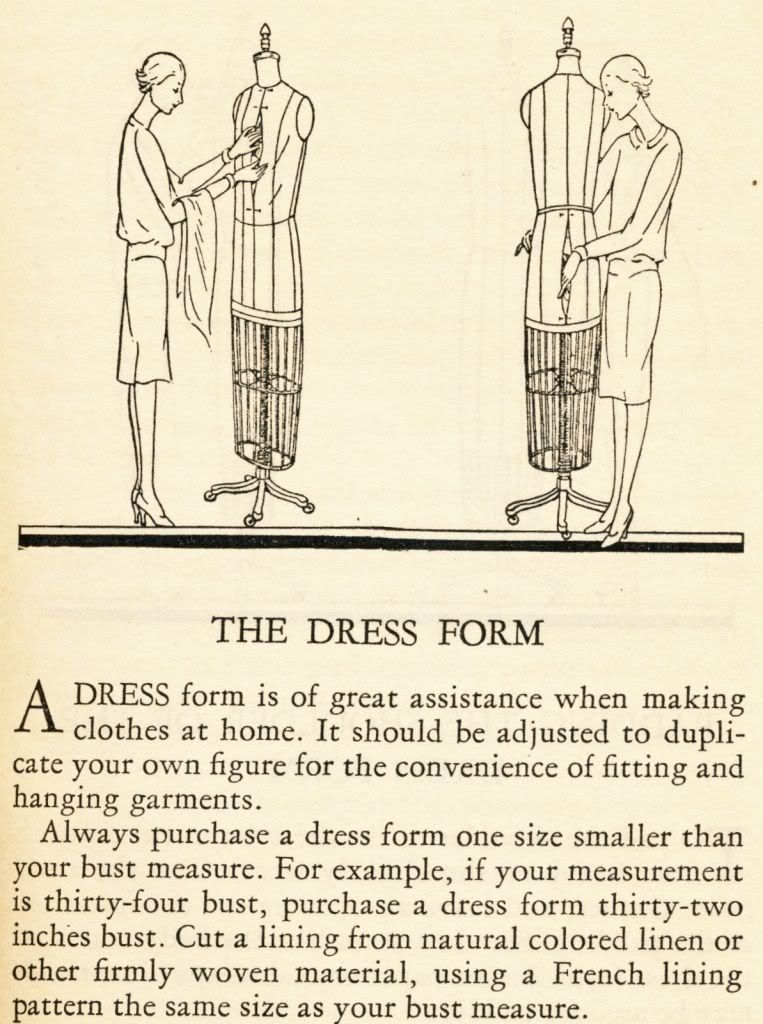
This is a lovely book from 1928 published by The McCall Company, authored by Laura I. Baldt and we have a lovely picture of her. We'll see a couple of pages covering "The Dress Form". (More to come!)
What is she doing??? This just looks rude.

Saturday, April 17, 2010
The Woman's Institute - Cutting And Fitting - Part 3
This edition is called Cutting And Fitting. The copyright for this is 1928. This concentrates on how to correct fitting problems.
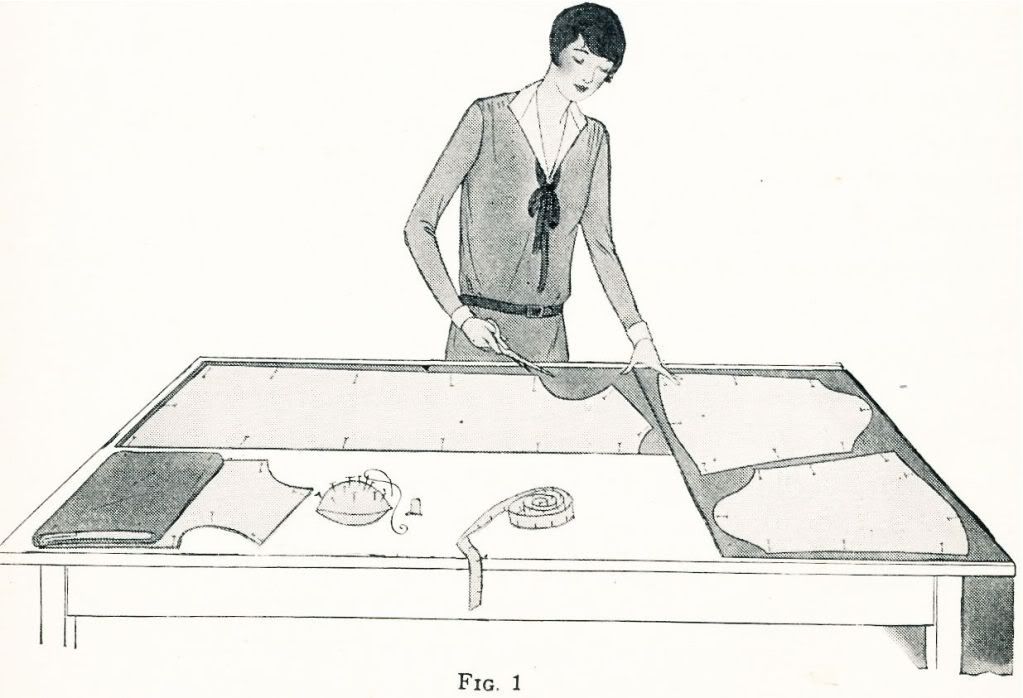
"To spread out the material on which to arrange the pattern pieces before cutting, it is necessary to have a large smooth, flat surface. This should be a table, a good type being shown in Fig. 1. A bed, which is sometimes used, is not satisfactory as it does not have a firm surface and so makes accurate cutting difficult. If you do not have access to a large table, a large piece of wall board, which can be laid on the bed when needed and stored in a closet when not in use, will help to solve your problem."
" The slip shown in Fig. 14 illustrates the type of foundation that is often necessary for the coat dress that opens at the side front. A section of the material of the dress is added so that the skirt, in swinging open, does not show a contrasting rnaterial. The shape and width of this section will depend on the cut of the dress to be worn over the slip. Also, a vestee is attached, a feature that is often necessary in both coat and other types of dresses. Two lengthwise darts in the back give an opportunity to fit the slip as snugly as desired. Either the built-up or camisole may be used."
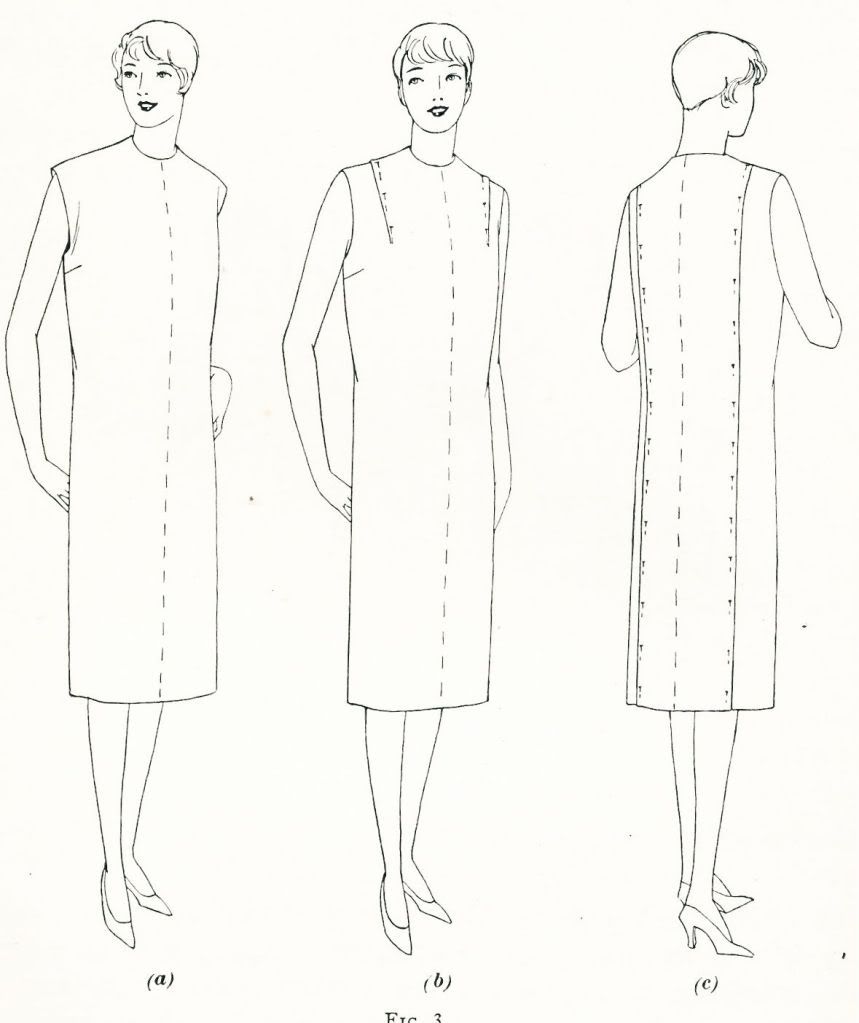
" Shoulder of Garment Too Wide.-In making patterns for the larger sizes, the width of the shoulder is sometimes increased in proportion to the size of the bust. However, in the figure itself the size of the shoulder, which is a bony structure, does not often increase in proportion to the increased measurement of the bust, which is a tissue structure. So it often happens that a pattern, purchased by bust measurement, provides a shoulder that is too wide, as shown in Fig. 3, view (a). The same defect occurs in smaller sizes when the shoulders of the figure are unusually narrow. Or, if the material used is one that stretches on the cross grain, such as some of the knitted fabrics, a similar problem often arises."
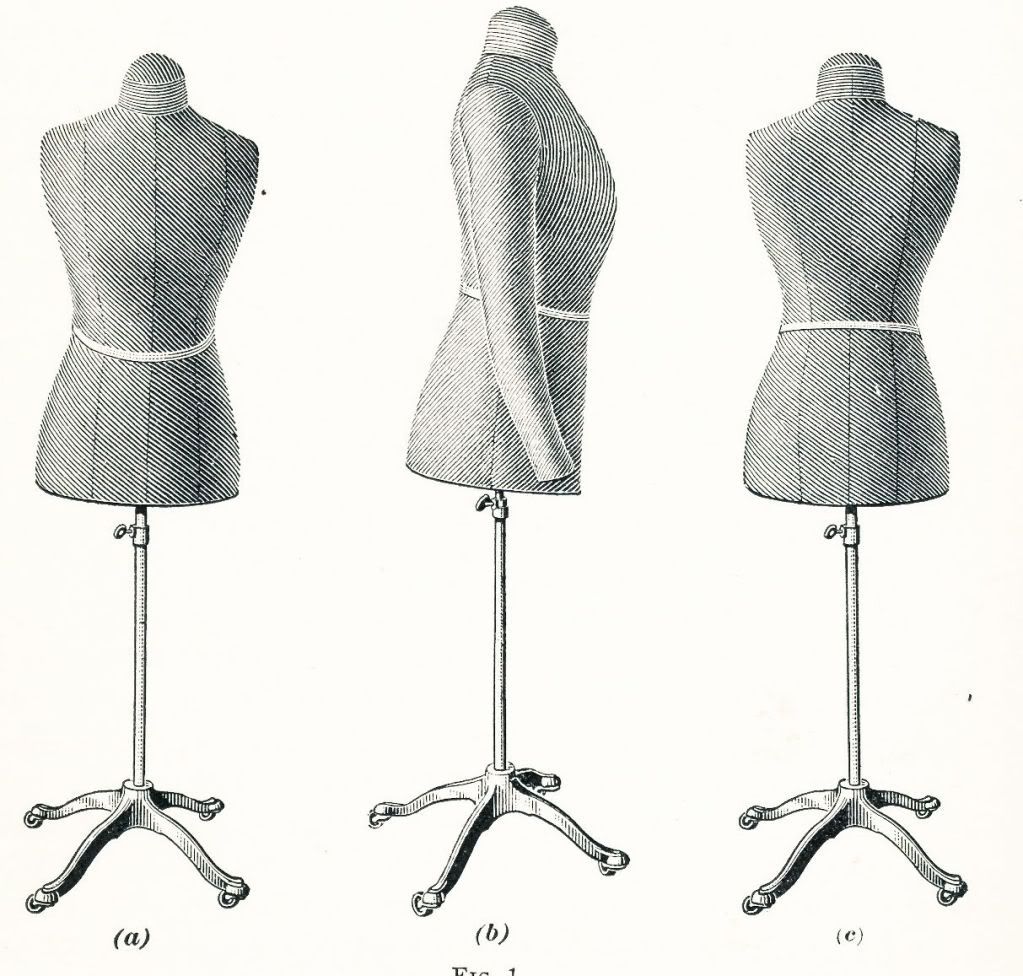
"Because of variations in the measurements of different persons, it is rarely possible to obtain a solid form duplicating exactly the individual figure. The best plan, therefore, is to procure a form seemingly smaller than is required and increase it to individual measurements by the use of a padding of cotton batting and a tight lining. A dress form that has been padded is shown in Fig. 1 view (a) showing the front view, (b) the side with arm attached, and view (c), the back.
To prepare such a form, first make a tight lining that exactly fits the figure. Then pad the form and apply the lining and the arms."

Saturday, October 31, 2009

Friday, September 18, 2009
Saturday, July 4, 2009
Sunday, June 14, 2009
Saturday, June 6, 2009
Subscribe to:
Posts (Atom)