Monday, November 12, 2012

Civil War Fashions - Engravings from 1864 Ladies Friend Magazine - Waists

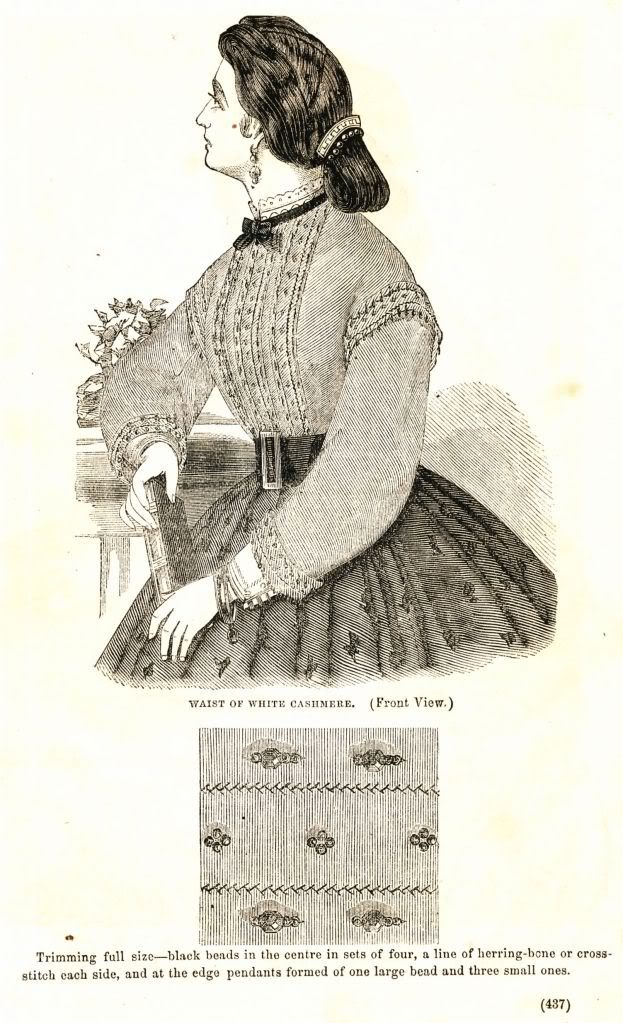
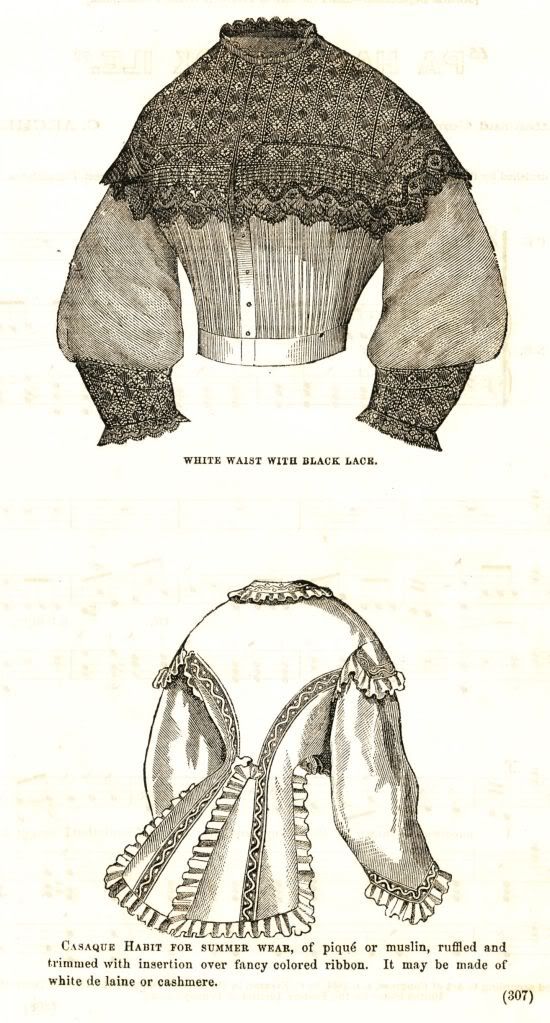
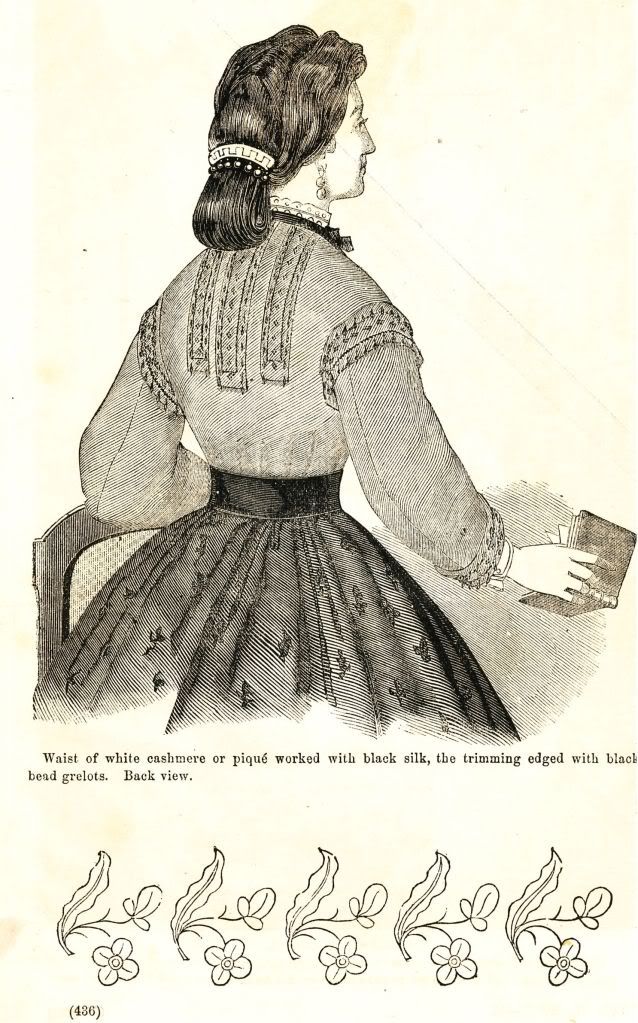
I think these waists would have been worn with the spectacular jackets or at home alone. But I'd love to learn more.
In any case these are probably fancier and more detailed than anything you or I own today. True haute couture!


Sunday, November 11, 2012

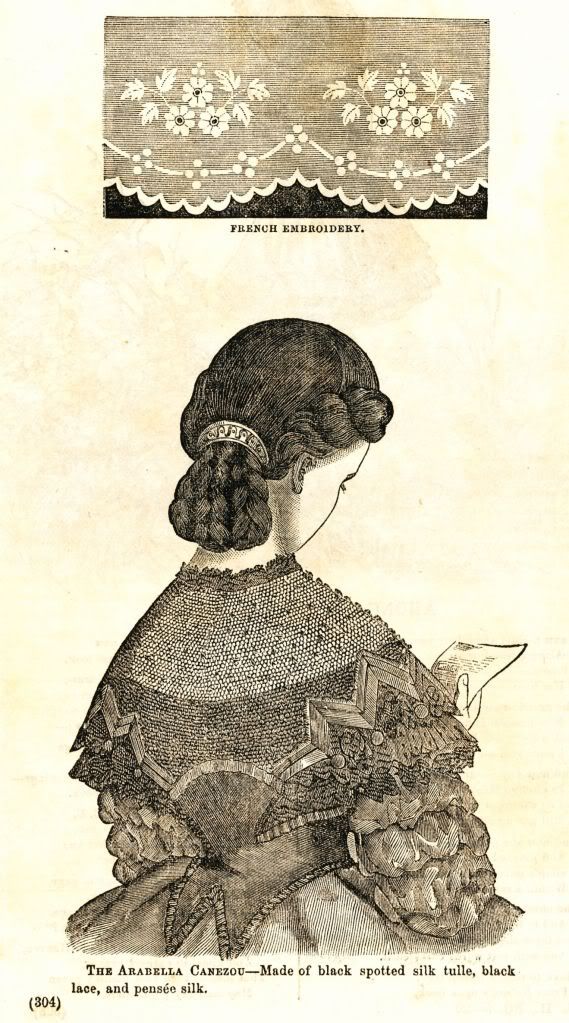
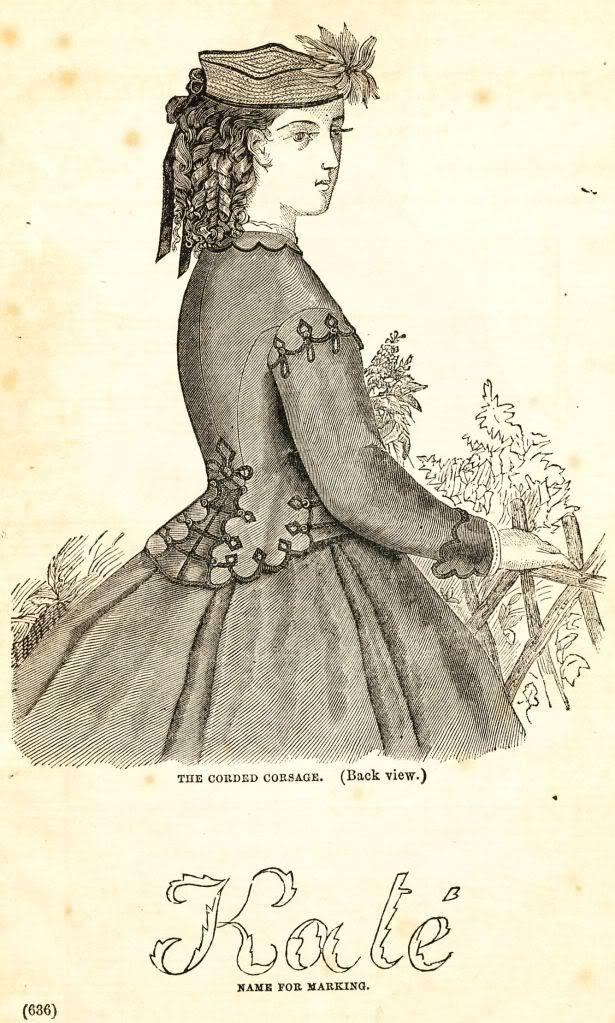
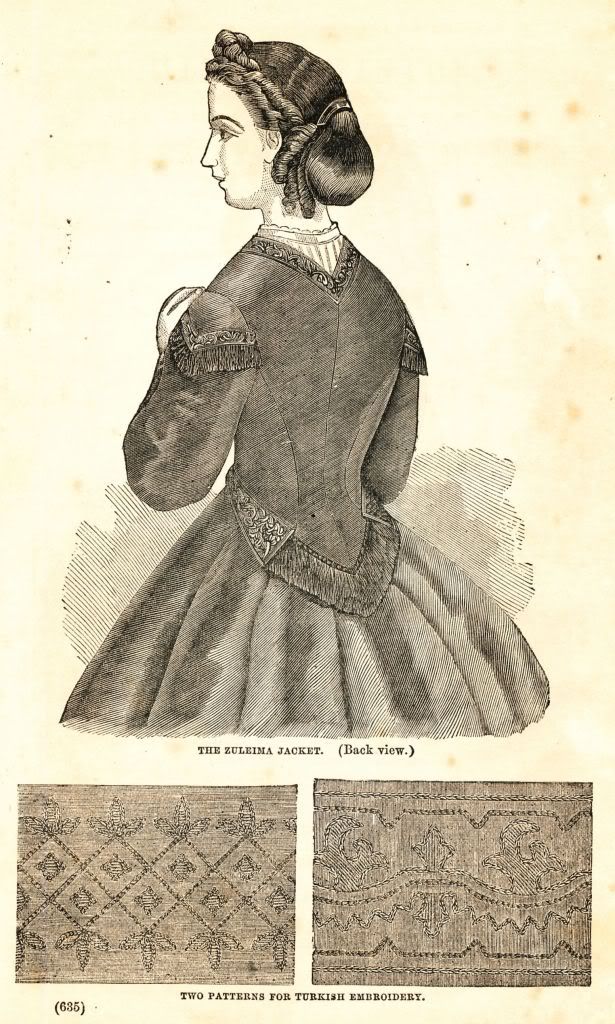
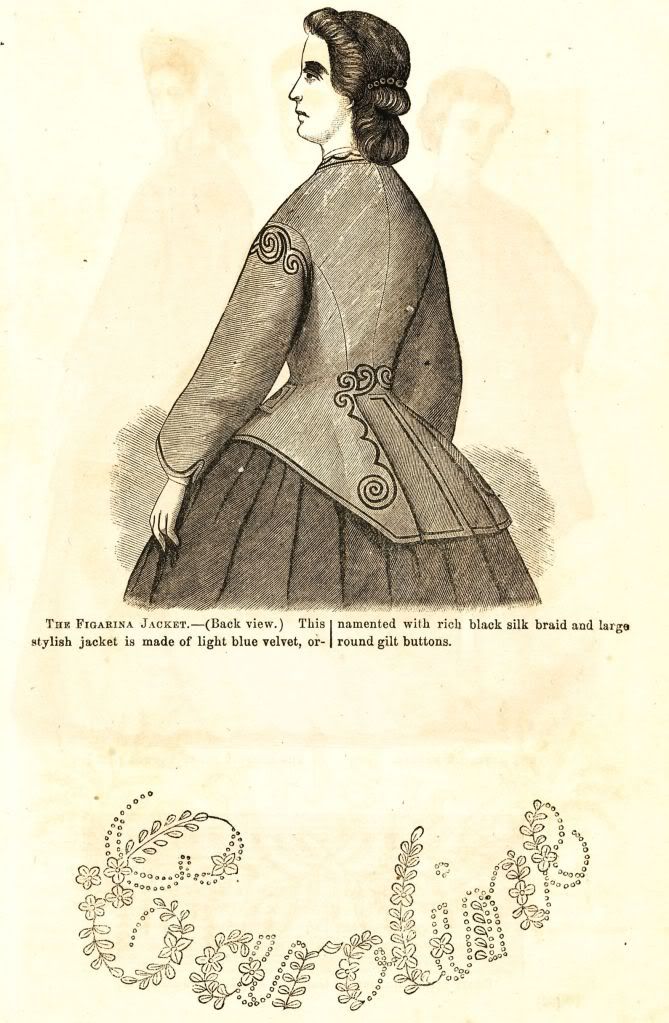
Civil War Fashions - Engravings from 1864 Ladies Friend Magazine - Back Views

More Civil War era fashions from The Ladies Friend magazine. These back views were often fancier than the front!


Saturday, November 10, 2012

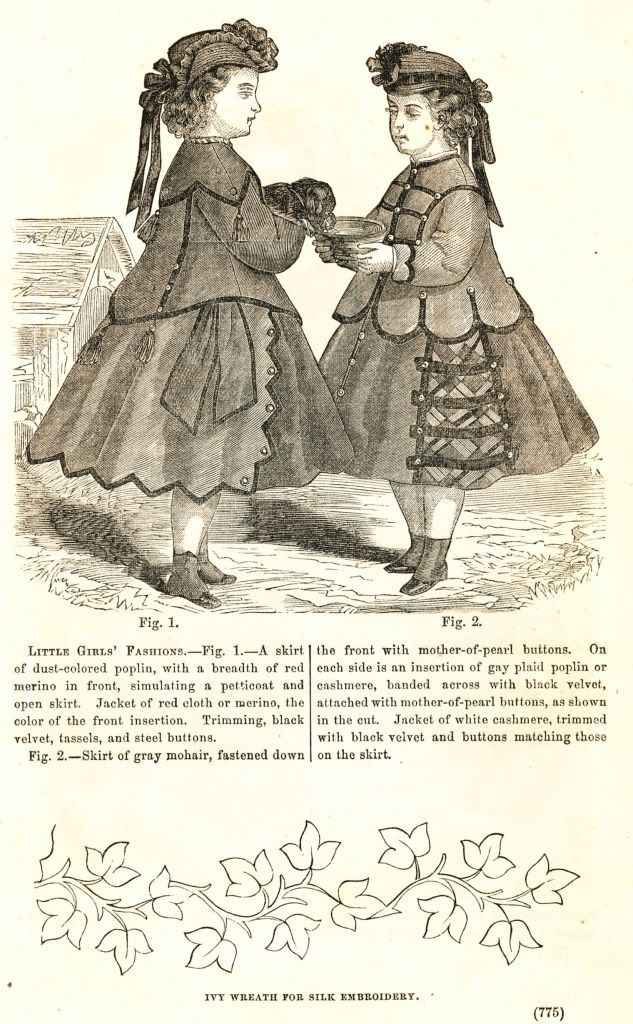
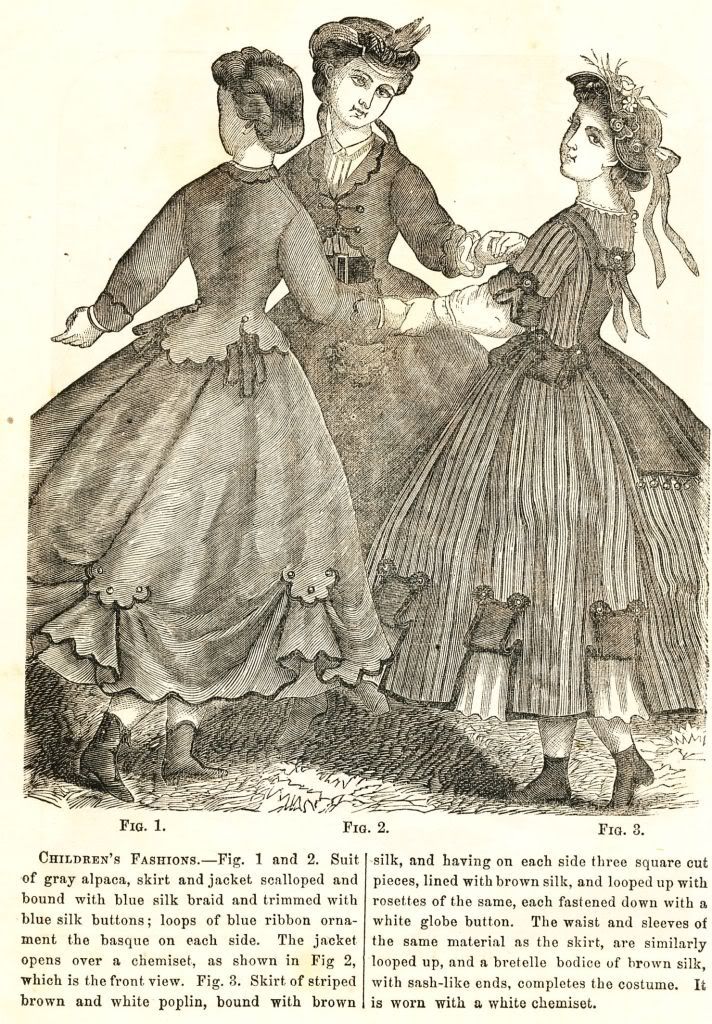
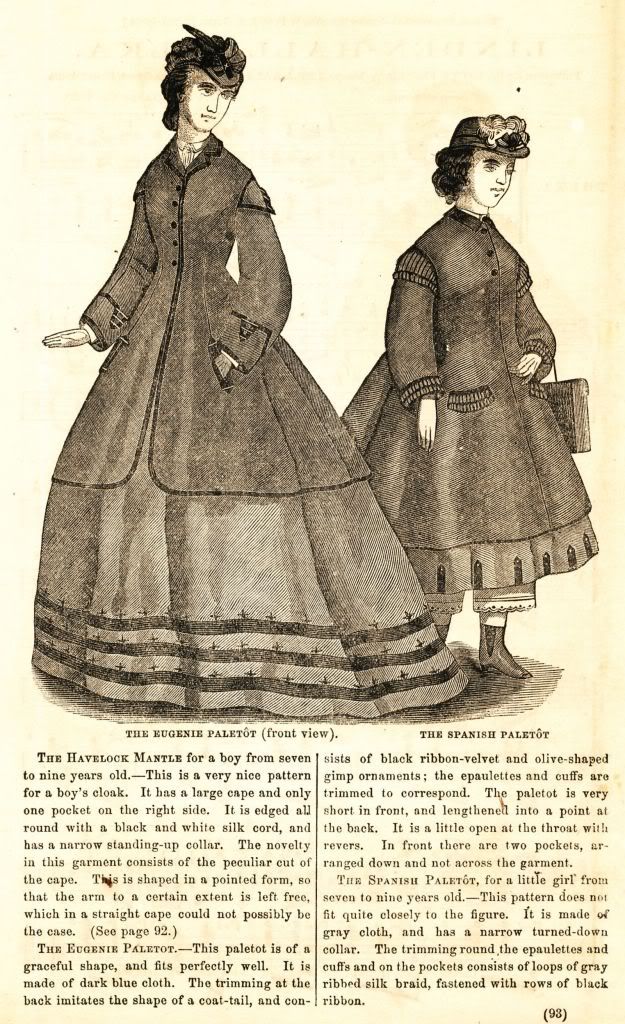
Civil War Fashions - Engravings from 1864 Ladies Friend Magazine - Children's Clothes

These engravings from The Ladies Friend Magazine show what kids were wearing during the Civil War. They looked just like the adults. And just as much effort would have gone into making these as for the adults. But they had to withstand the wear and tear of active children. But I'm sure things were passed on and re-made.
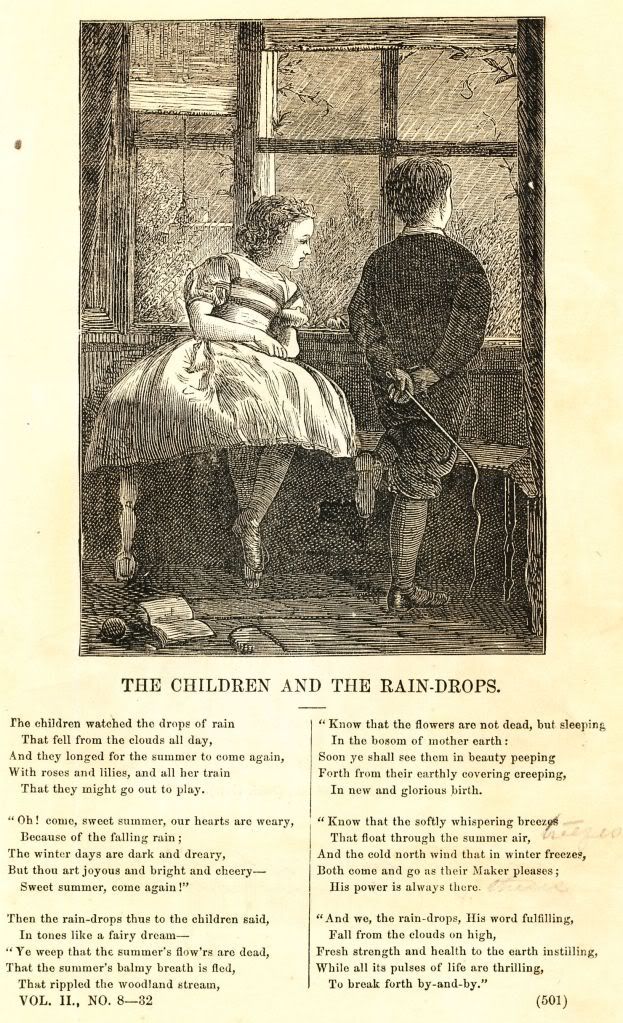
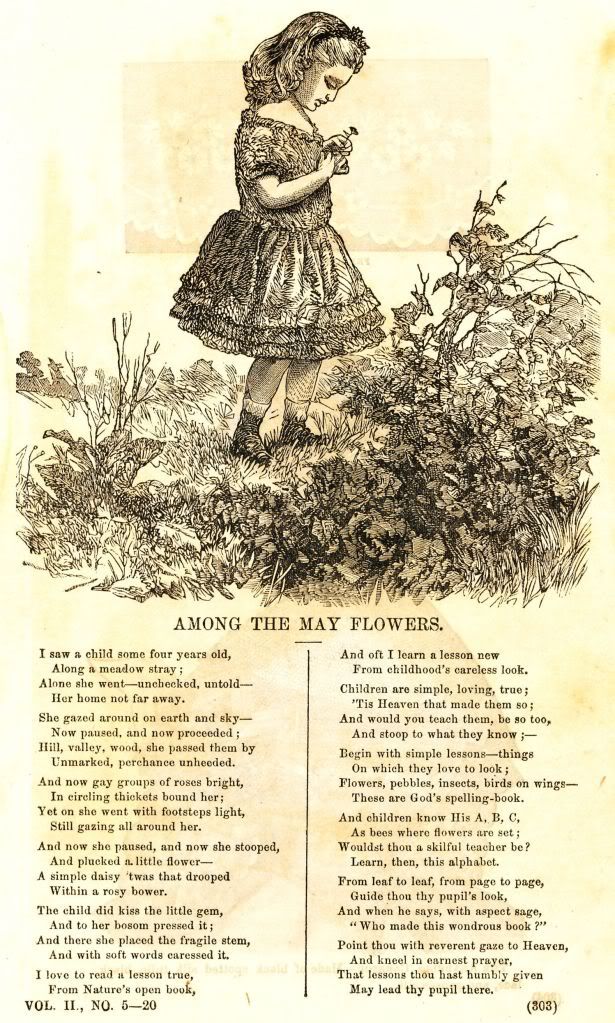
And you get a little poetry as a bonus.


Friday, November 9, 2012

Civil War Fashions - Engravings from 1864 Ladies Friend Magazine Part 3

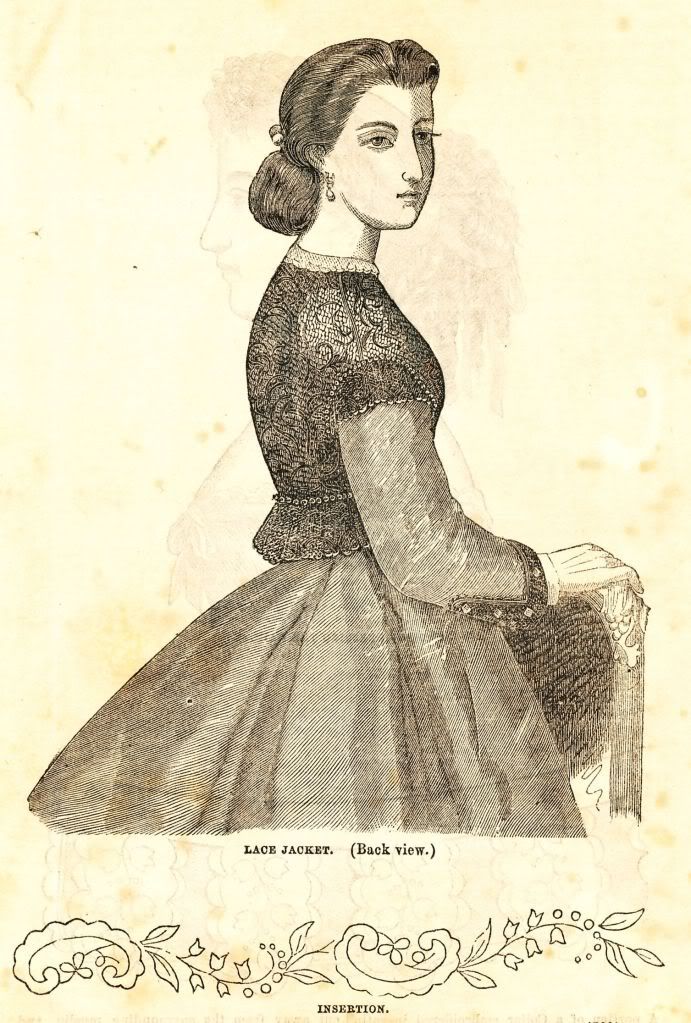
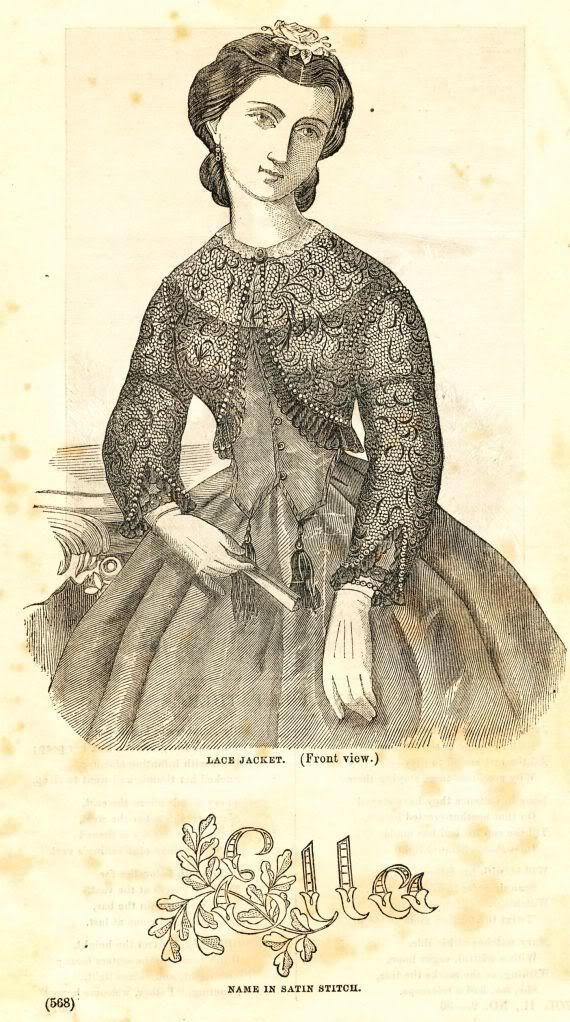
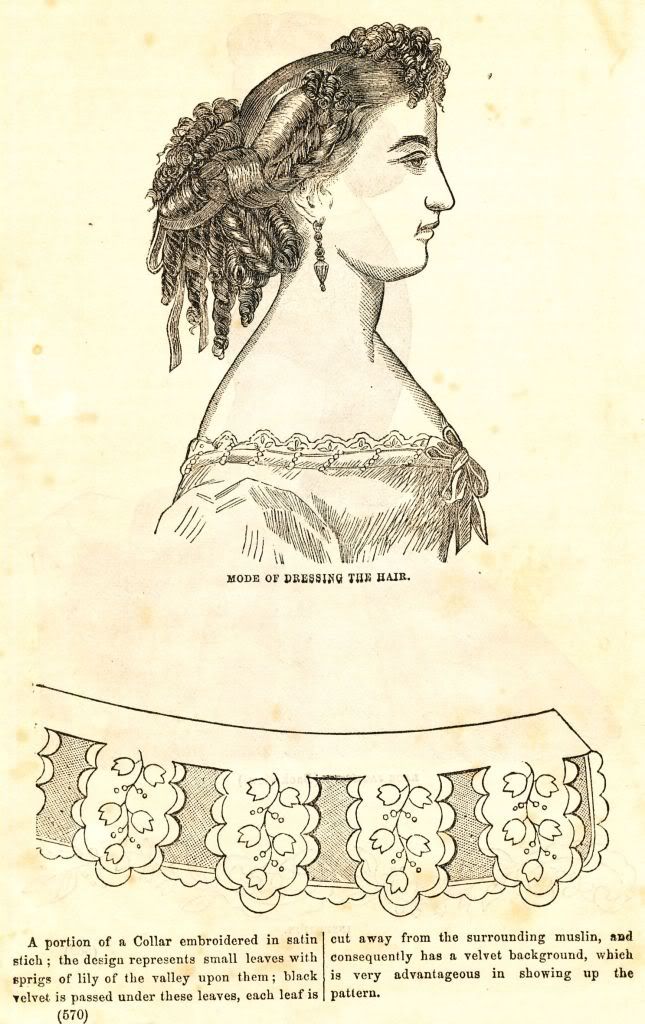
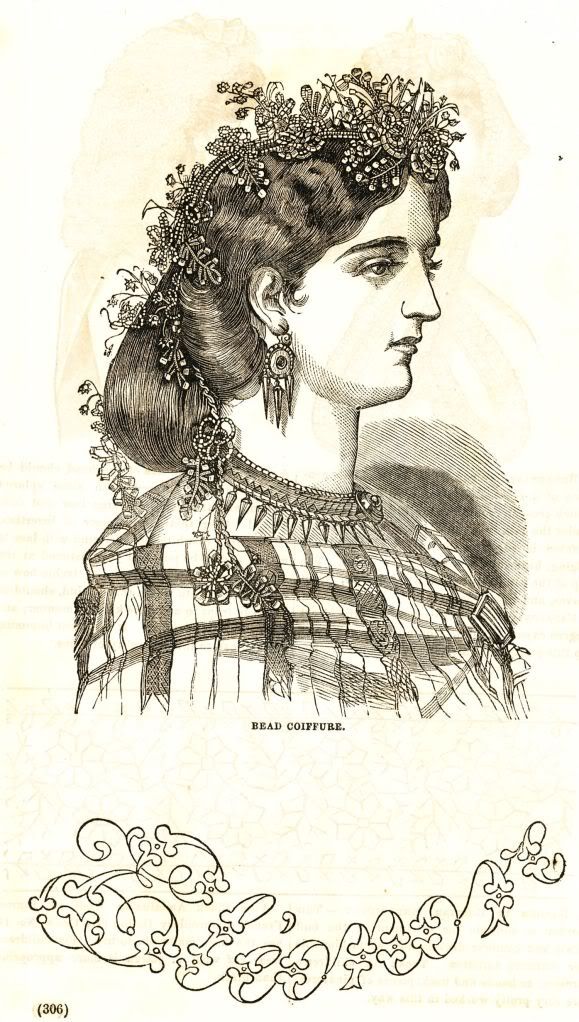
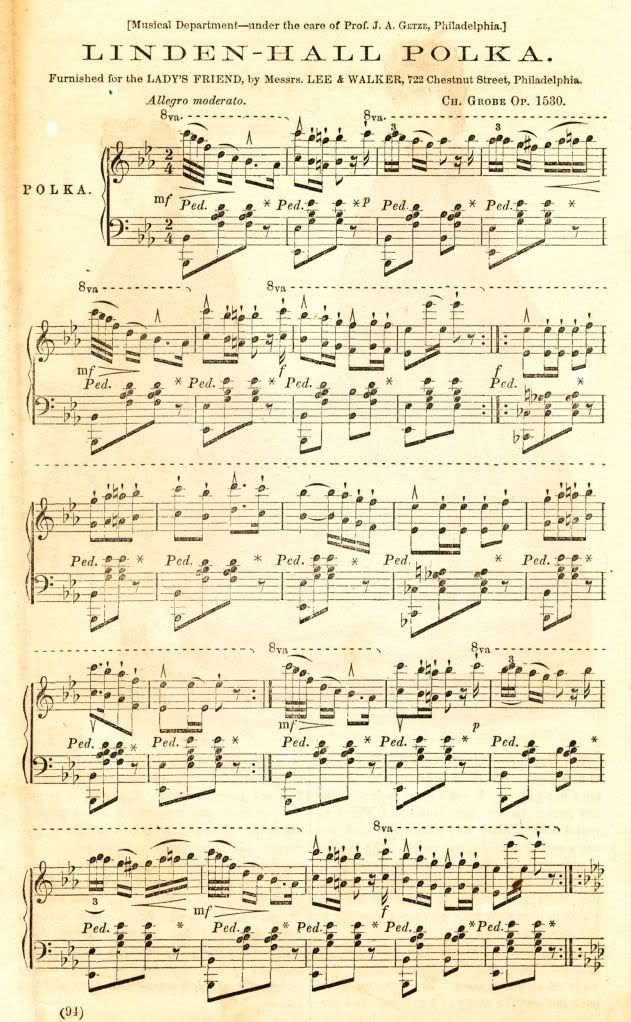
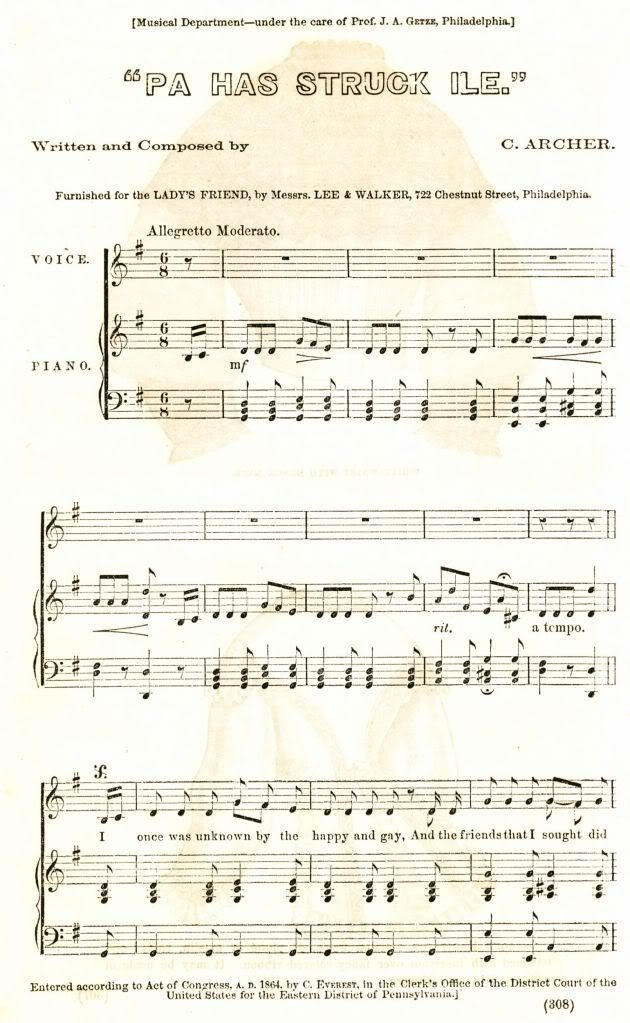
This group from the Ladies Friend Magazine features a beautiful lace jacket, hairdos and musical accompaniment.
The songs are Pa Has Struck Ile by C. Archer and The Linden-Hall Polka arranged by Charles Grobe.

I am always asking you to look at the details, but oh, my goodness. Can you BELIEVE those hairstyles? The effort it would have taken produce and wear these works of art...amazing.


Thursday, November 8, 2012

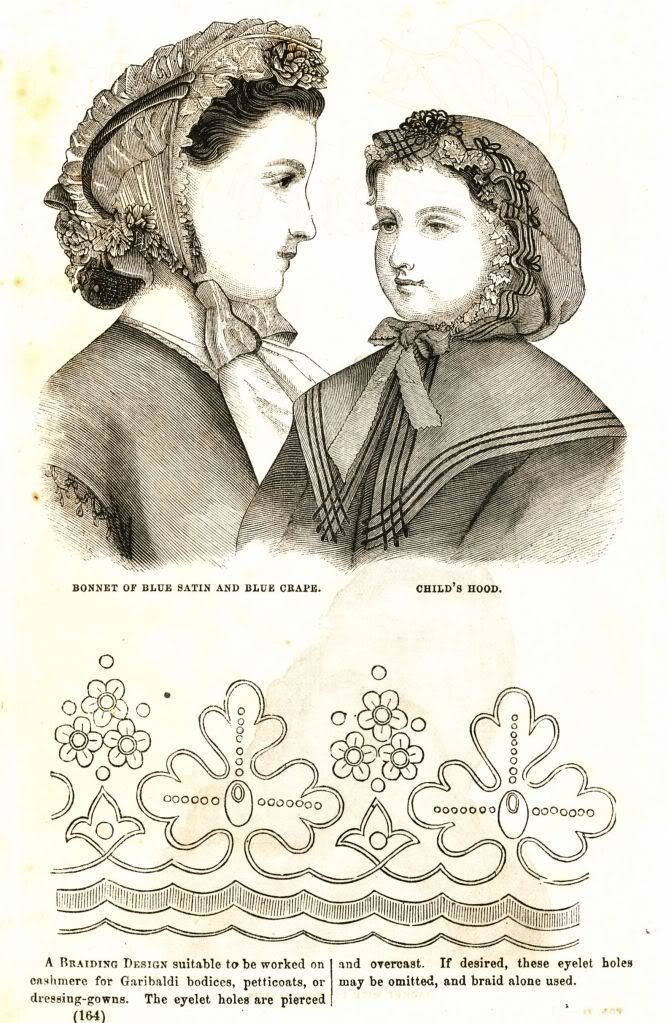
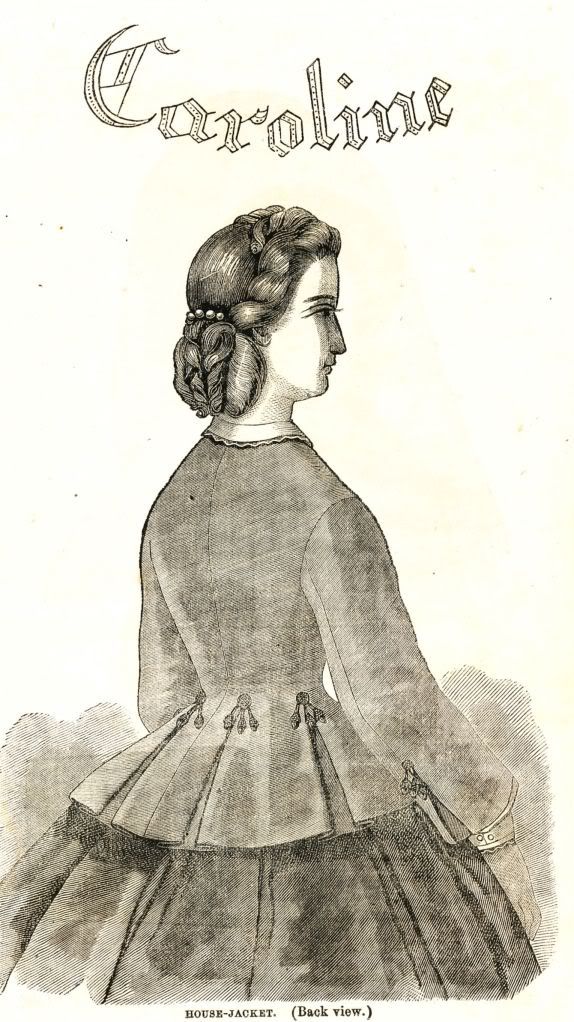
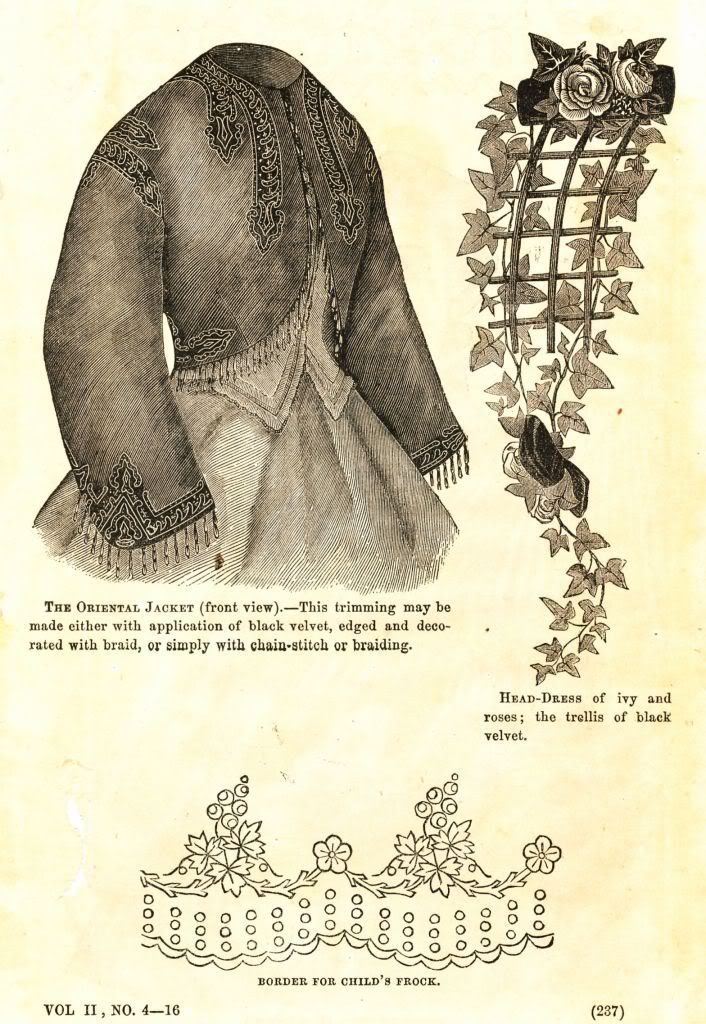
Civil War Fashions - Engravings from 1864 Ladies Friend Magazine Part 2

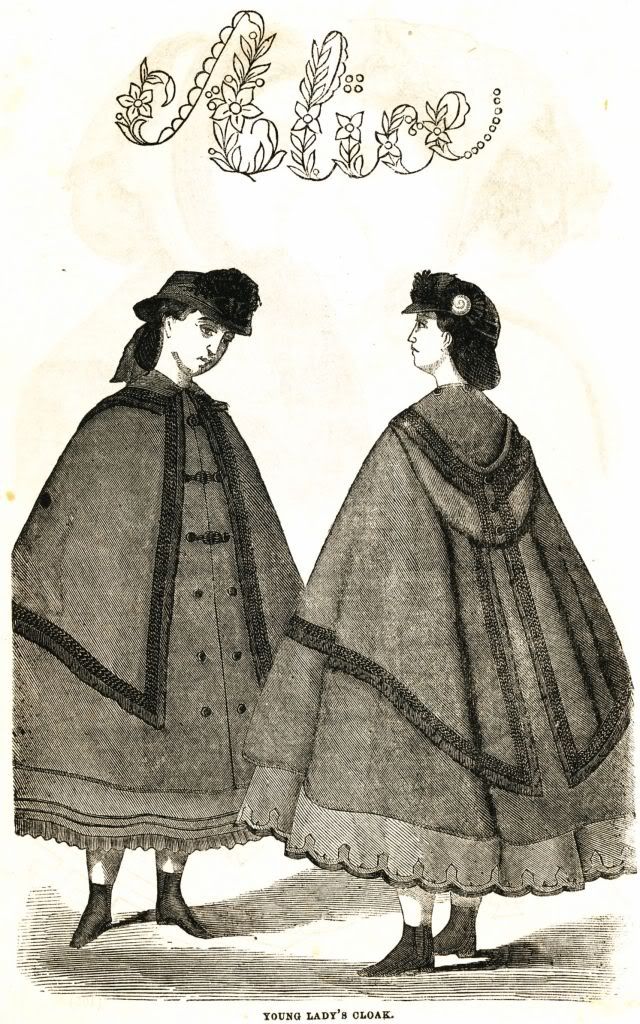
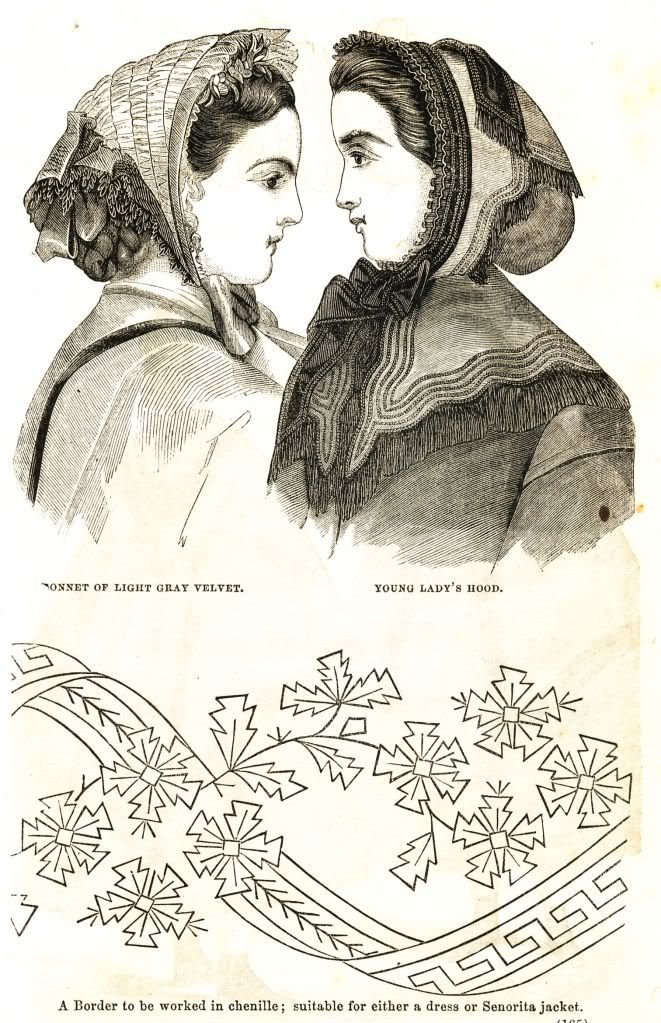
More of these lovely engravings from 1894 Ladies Friend Magazine. These feature bonnets, capes, braided and embroidered trims, and a House-Jacket that looks pretty fancy for something worn at home.


Wednesday, November 7, 2012

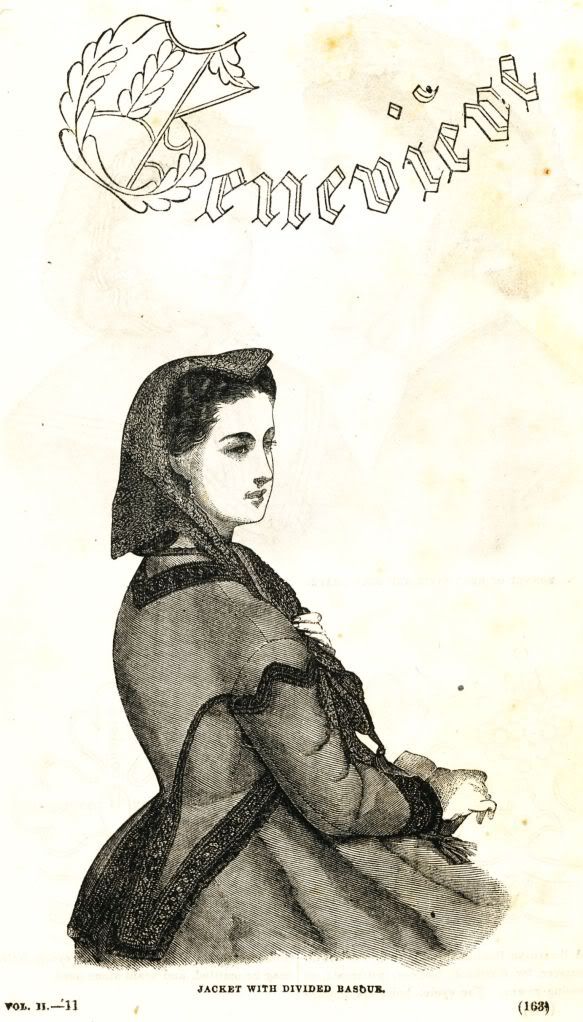
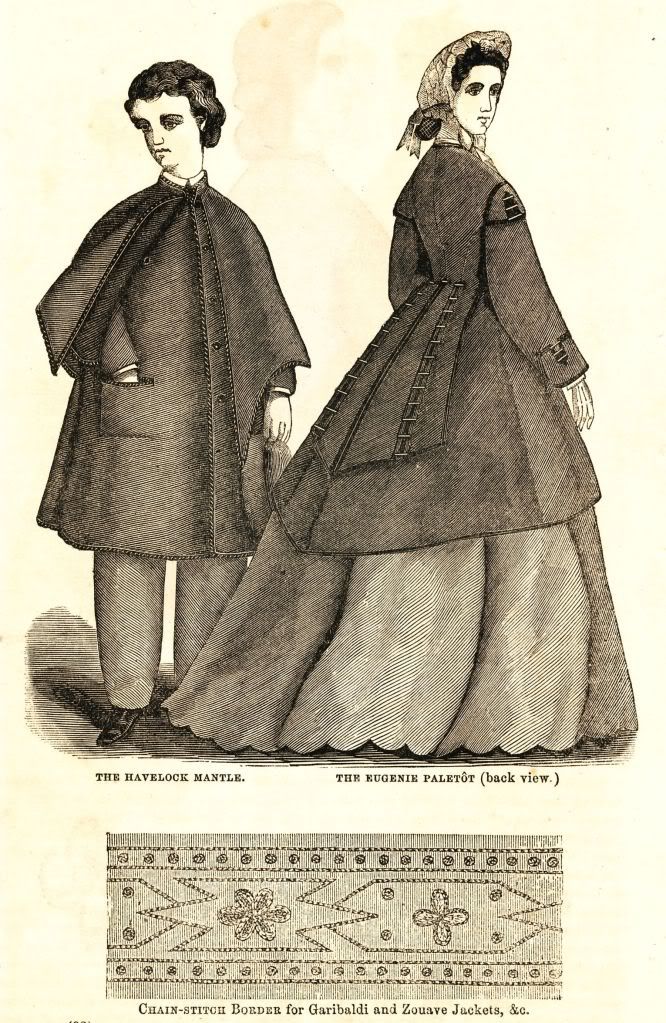
Civil War Fashions - Engravings from 1864 Ladies Friend Magazine

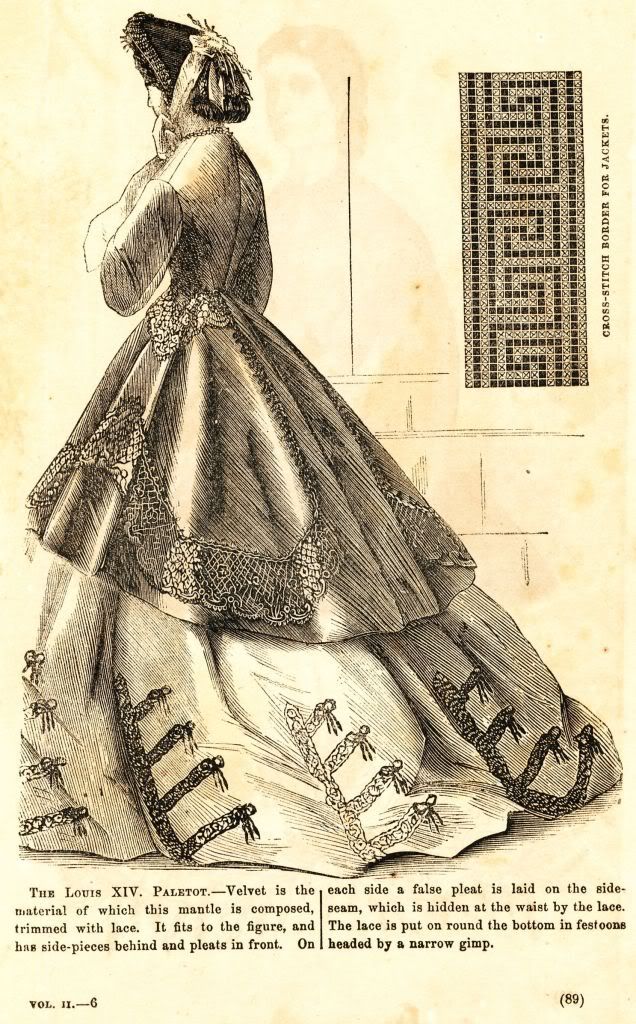
I have a group of loose sheets from the Ladies Friend Magazine. There are beautiful engravings of then current fashions with trims, hats, embroidery and even hair styles. There are also a few sheets showing music and those have dates of 1864-5. So these are what was being worn during the Civil War.
I am always amazed at the detail and effort what went into clothing. Just consider the trimmings alone, and the large amounts that would be needed. Even of a simple line of crochet had to trim a huge skirt. And so much done by hand. Including everything being washed by hand. Hard to believe.

I have quite a few of these pages so I'll post them over several days. I hope any readers with more knowledge about clothing from this era teach us more.
Take a moment to see all the details. Right click on the image and choose "Open in New Window". Then, to see even closer click once more. (Close that window to return)


For more information about Mantles check here and a Paletot here.


Tuesday, November 6, 2012

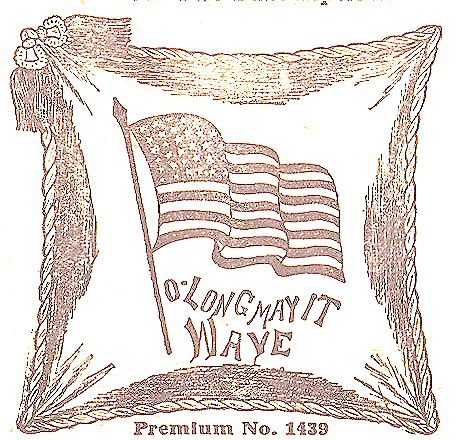
Long May It Wave

Long May It Wave


Monday, November 5, 2012

Making A Dress At Home - 1954

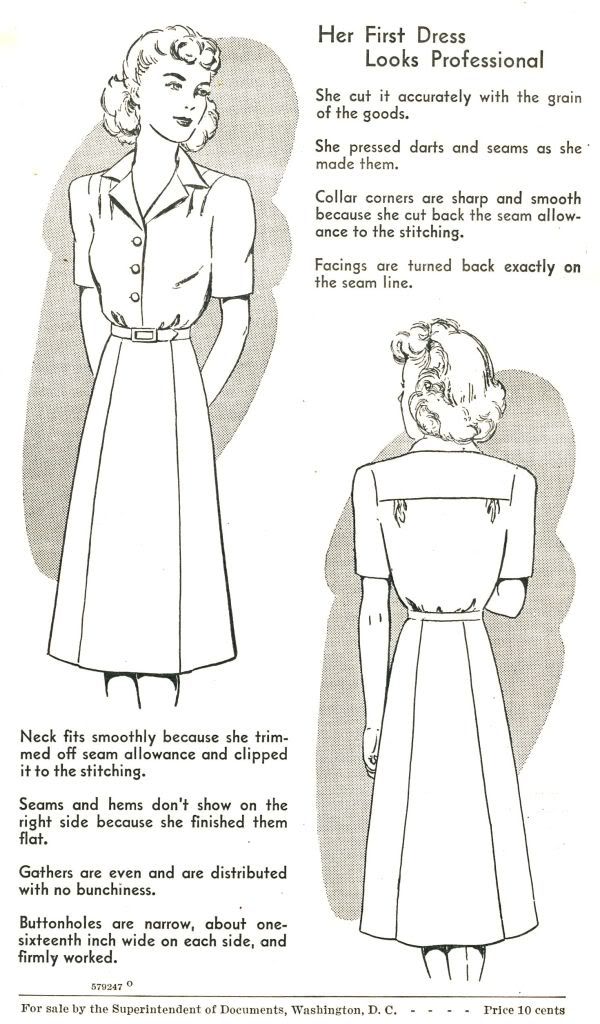
Her First Dress Looks Professional...just be sure to follow these helpful tips from the US Department of Agriculture - Farmers Bulletin dated 1954. That sounds very offical, so pay attention!


Thursday, November 1, 2012

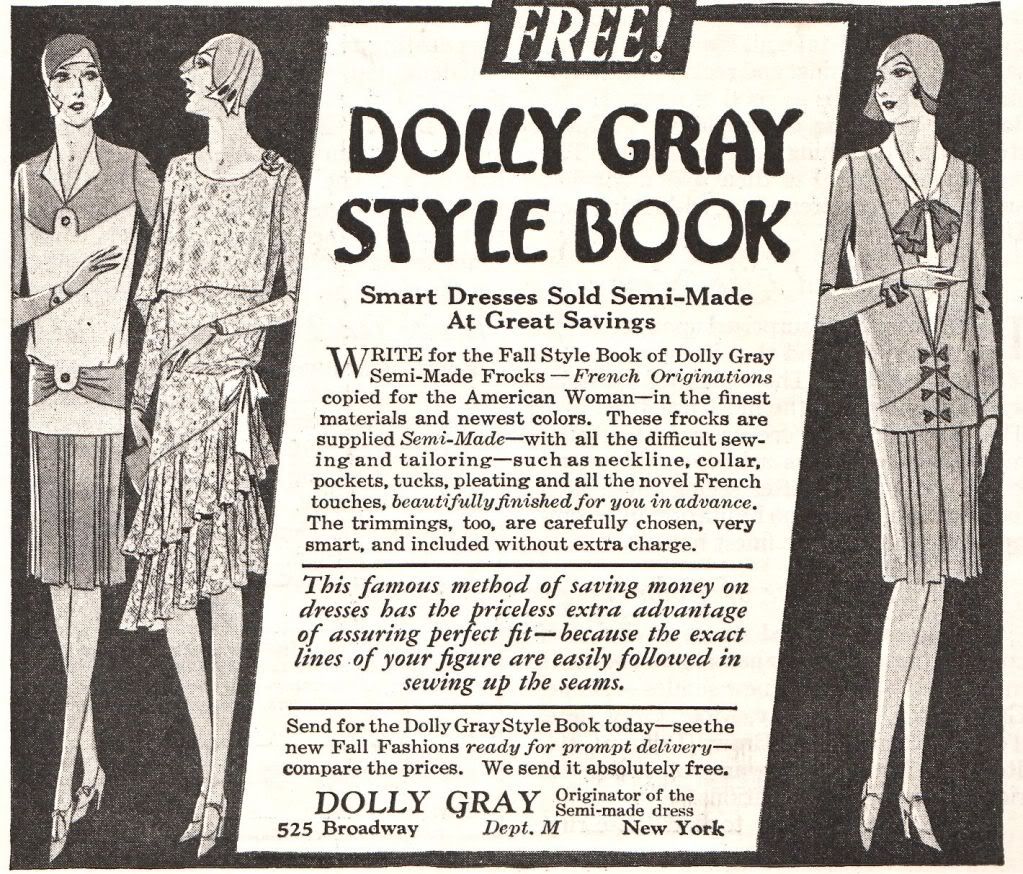
Stylish Semi-Made Dresses from Dolly Gray - 1929

The every so stylish Dolly Gray catalog from a 1929 McCall's Magazine brings us a choice of smart dresses semi-made. All the "difficult sewing and tailoring done, such as neckline, collar, pockets, tucks, pleating and all the novel French touches, beautifully finished for you in advance".
All you did was sew up the seams. This gave you "the priceless extra advantage of assuring a perfect fit".
I wonder why this method fell out of favor?


Wednesday, October 31, 2012

My Mending Shelf - advice from 1930

This article caught my eye because while we might not have as much darning of stockings or deal with runners in your nylons, but you may still face a huge basket of mending. Mary Waterstone Stuart has a solution for you. Make a shelf with all your supplies at hand and before you realize it your task is done."Definite places for things are such a comfort."

"I used to look at our huge basket of family mending, I always dreaded the task ahead of me. Then one day a happy thought struck me. I had- attractive shelves for books, for dishes, for knives, and for kettles. Why didn't I have a little sewing shelf, which would measure up to the rest of the house, a shelf so attractive that it would lend a glamour to the whole task of mending? The reason I disliked mending, I suddenly realized, was because it meant such a terrible waste of time. My tools were never at hand. And so I had kept putting off the job from day to day and the mending collected and grew more and more discouraging.
My plan was quickly carried out. I made a shelf of three-quarter-inch board, three and a half inches wide and twenty-five inches long, with a back to serve as an additional rack. These dimensions make an adequate abiding place for all the articles I need in ordinary sewing and mending work, but offer no refuge for excess baggage. I painted my shelf a gay lacquer red, treating it as an ornament of the room, but I could have matched the color of the wall had I wanted to make it unobtrusive.
When I had completed the outfit I felt very proud of it and hung it in the room where I usually mend, while the children play around or bring me their clothes which need a button or an odd stitch or two. Of course, it was in a good light for both day and night work, and within easy reach of my low sewing chair.
On the back of the rack I drove in six brads at an angle, and on them placed a few necessary spools of thread. Black and white cotton in two weights—one for buttons and the other of lighter weight for hand and machine sewing—were all that I really needed. As I happen to use beige and black silk frequently I gave these a place also. These spools are merely slipped over the brads and can be changed at any time. There is no need to keep a large stock of thread and sewing silk on hand if you are within easy contact with the shops.
Darning stockings is an all important process, if there are children in the home. Also, runners in grown-up stockings are usually discovered just at the sound of the automobile which is to carry you to some special function. To meet both these needs, I have equipped my shelf with four balls of mercerized cotton in the colors most often used. Moreover, since I frequently have to take a stitch in a hurry, each colored cotton has its own needle and this needle I leave in its particular ball, threaded, and ready to use. Then I can arrive at the shelf, pause for a thread, and almost before I realize it, the task is done, and the needle replaced in its particular ball.
Of course, with this darning equipment must go a darning ball. Mine has a handle which will slip into the fingers of gloves, and I accommodated it to my shelf by neatly drilling a hole through the wood. To the thimble I assigned a special place and it is such a comfort to have it always bowing to me as I approach hastily instead of having to hunt for it.
Next on my shelf, I put two small duplex boxes, which are as gay as the heart could wish. These little things hold a few snaps and hooks and all the buttons which the family will need for a few weeks. Buttons are a product with which we are apt to over-supply ourselves. Actually we use very few.
Below the shelf I put a series of small cup-hooks. The first one holds a pincushion and the second a cushion for needles and needles only. I always have a safety pin or two present. I use them to draw various tapes and runners in bloomers and pajamas.
The next hook I definitely assigned to the tape measure. The next holds a woven band of colored darning threads. They are attractive, useful and inexpensive, and no mending shelf is really equipped without one. On the remaining two hooks I hung the scissors. I find two pairs sufficient; one for cutting and the other, a small pointed pair, for fine work. Definite places for things are such a comfort.
With this equipment on hand, even a large order of mending from a ten year-old son loses its deadly effect, and the running time, of all weekly mending is infinitely reduced."

Monday, October 29, 2012

Paris Makes New Style Points with Seamings - 1929

From McCall's Magazine in September 1929 these evening gowns are the latest thing from Paris, but of course you bought the pattern to make these at home.
But it's all about points, hemline points, waistline points, neckline points, they are L'Echo De Paris!

"There are always details that date a new Paris frock as belonging to the season just beginning instead of the one coming to an end, and pointed treatments are just such a detail in the new French showings. Almost every designer uses them in some form or other, yet there is no uniformity because the points are used in ways as original as the lines of the dresses themselves. In one frock on this page, the points are a minor detail, used to suggest a higher waistline in an evening gown of stiff silk. In the other frock, pointed effects are the theme of the dress, with pointed seamings, a pointed cape collar and dipping hemline."


Sunday, October 28, 2012

L'Echo De Paris - Fabulous Styles from 1929

More wonderful Parisian inspired frocks from McCall's Magazine, September 1929. You could choose wool but consider if it is appropriate in your "steam-heated American house". After all, Suitability is the important thing to keep in mind.
As always don't miss the details; these are 'cleverly seamed and pleated' with 'curved seaming' and 'slightly draped' necklines. Plenty to challenge the seamstress.

"PARIS is creating more and more frocks for daytime of light weigh woolen fabrics, some of them frocks that accompany a coat of the same material to form an ensemble and others that are intended to be worn alone or with a scarf or fur. They are of such light woolen that they overcome the usual objection to woolen frocks in steam-heated American houses, and being so light, they are made in models that are equally attractive made up in silks."


"SUITABILITY to the person who is to wear it and to the occasion when it will be worn is the rule that governs French daytime frocks, so the tailored fashions that form the smartest costumes for daytime include all types. One may have a soft feminine type of tailored, frock with a circular skirt and a bow at the neck and waist, or a frock with crisp pleats, tailored in every detail. Or frocks that compromise by having tailored lines, and soft feminine details."

Saturday, October 27, 2012

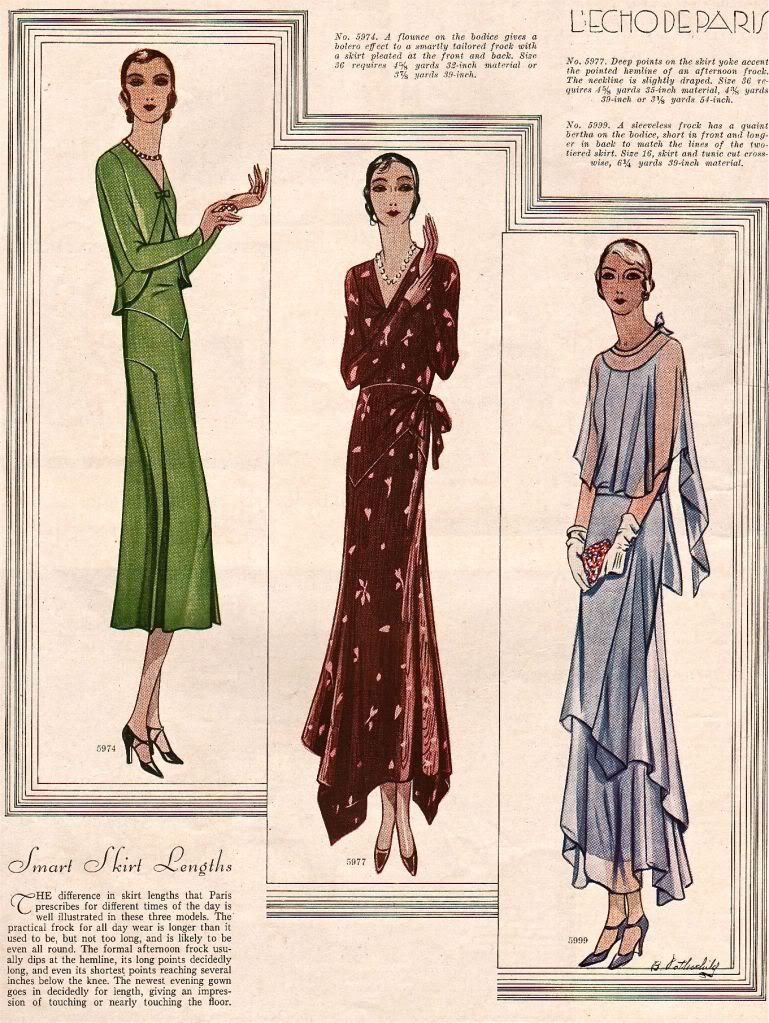
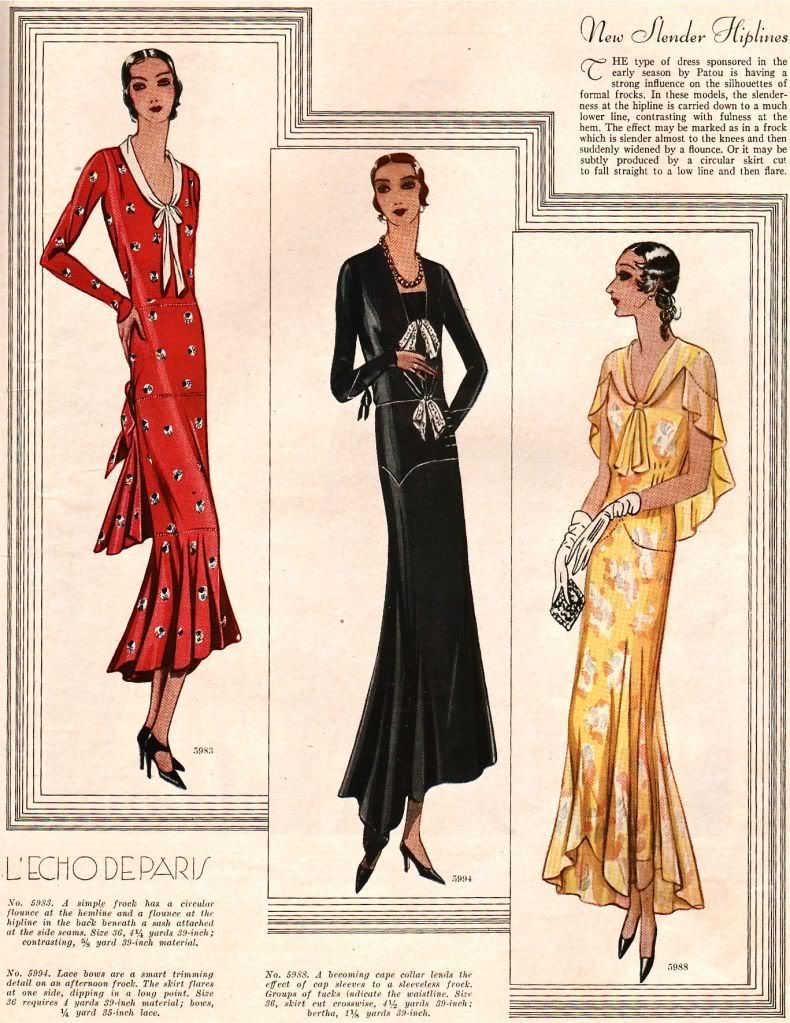
L'Echo De Paris - 1930 Fashions

This 1930 issue of McCall's Magazine shows the latest styles from Paris. There are Smart Skirt Lengths and New Slender Hiplines.
These were patterns you bought to sew at home. How the 1930's sewing machines handled all this sheer draping fabrics cut on the bias reminds us just how good these seamstresses were.


"The difference in skirt lengths that Paris prescribes for different times of the day is well illustrated in these three models. The practical frock for all day wear is longer than it used to be, but not too long, and is likely to be even all round. The formal afternoon frock usually dips at the hemline, its long points decidedly long, and even its shortest points reaching several inches below the knee. The newest evening gown goes in decidedly for length, giving an impression of touching or nearly touching the floor."

"The type of dress sponsored in the early season by Patou is having a strong influence on the silhouettes of formal frocks. In these models, the slenderness at the hipline is carried down to a much lower line, contrasting with fulness at the hem. The effect may be marked as in a frock which is slender almost to the knees and then suddenly widened by a flounce. Or it may be subtly produced by a circular skirt cut to fall straight to a low line and then flare."
Monday, October 22, 2012

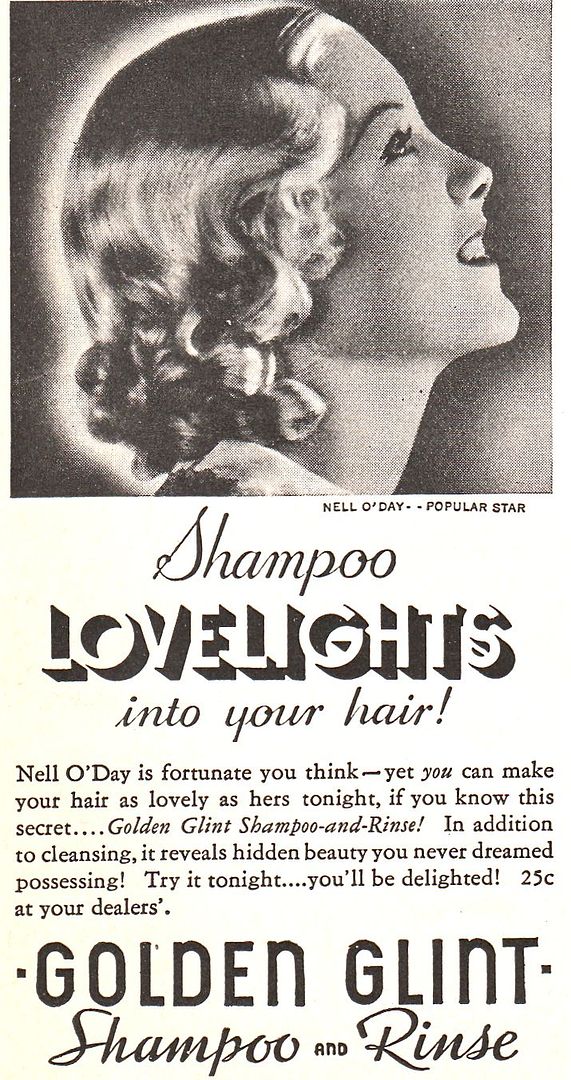
Shampoo Lovelights into your Hair! - 1934

Would Nell O'Day steer you wrong? She washes Lovelights into her hair when she uses Golden Glint Shampoo and Rinse...it reveals hidden beauty!

Sunday, October 21, 2012

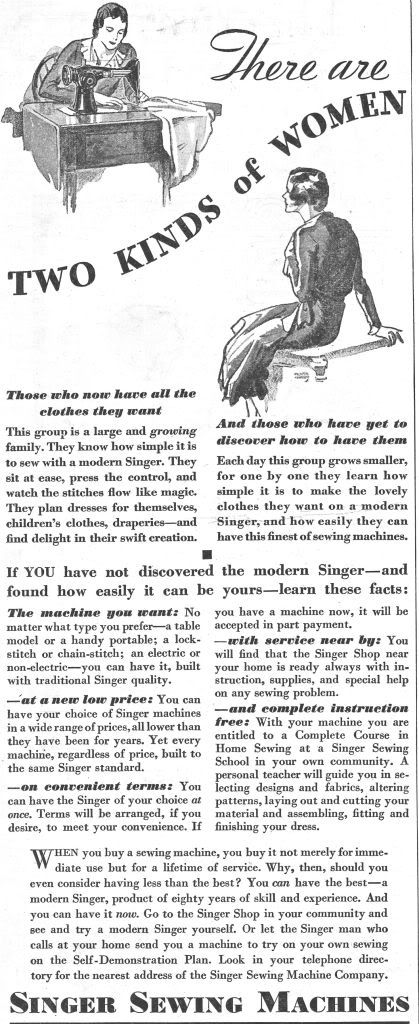
There Are Two Kinds Of Women...

Those who now have all the clothes they want, and those who have yet to discover how to have them."
Of course the smart gal has a Singer, "They sit at ease, press the control, and watch the stitches flow like magic."
Just talk to your Singer man!


Thursday, October 18, 2012

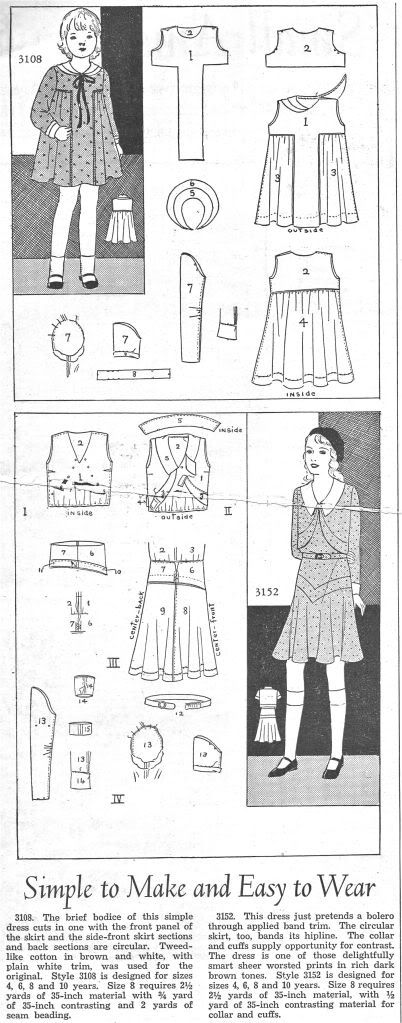
Simple To Make and Easy To Wear - Girls Dresses from 1931

Maybe these would be easy for you to make...I'd have some trouble I think, especially the one with that "just pretends a bolero". But your sewing skills were expected to be pretty advanced in 1931. So you should have had no problem whipping these out!

Wednesday, October 17, 2012

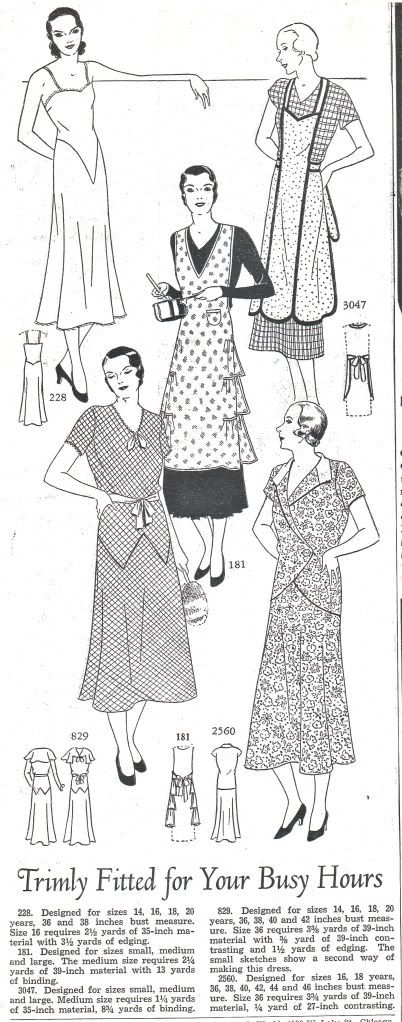
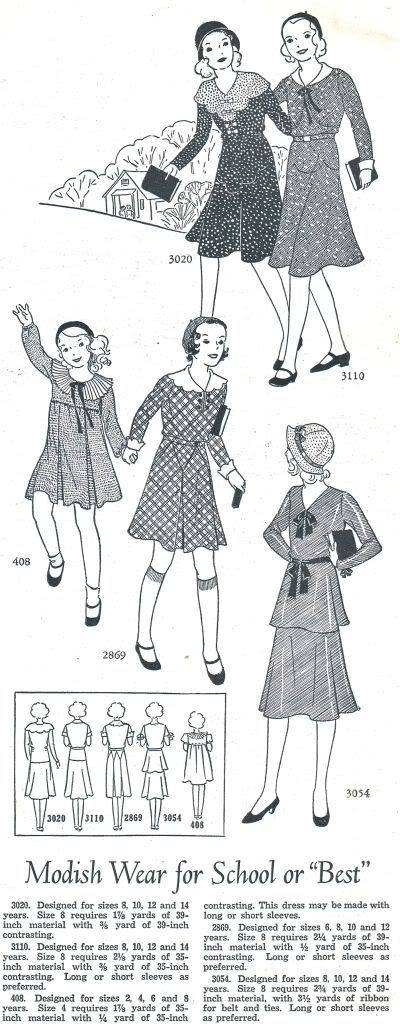
What Stay At Home Moms wore in 1931

In 1931 the stay at home Mom had to be "Trimly Fitted for Your Busy Hours", with slips, dresses and some pretty nice aprons. While of course, the kids needed "Modish Wear for School or 'Best'". I imagine part of Moms duties was to sew up all that Modish Wear!


Tuesday, October 16, 2012

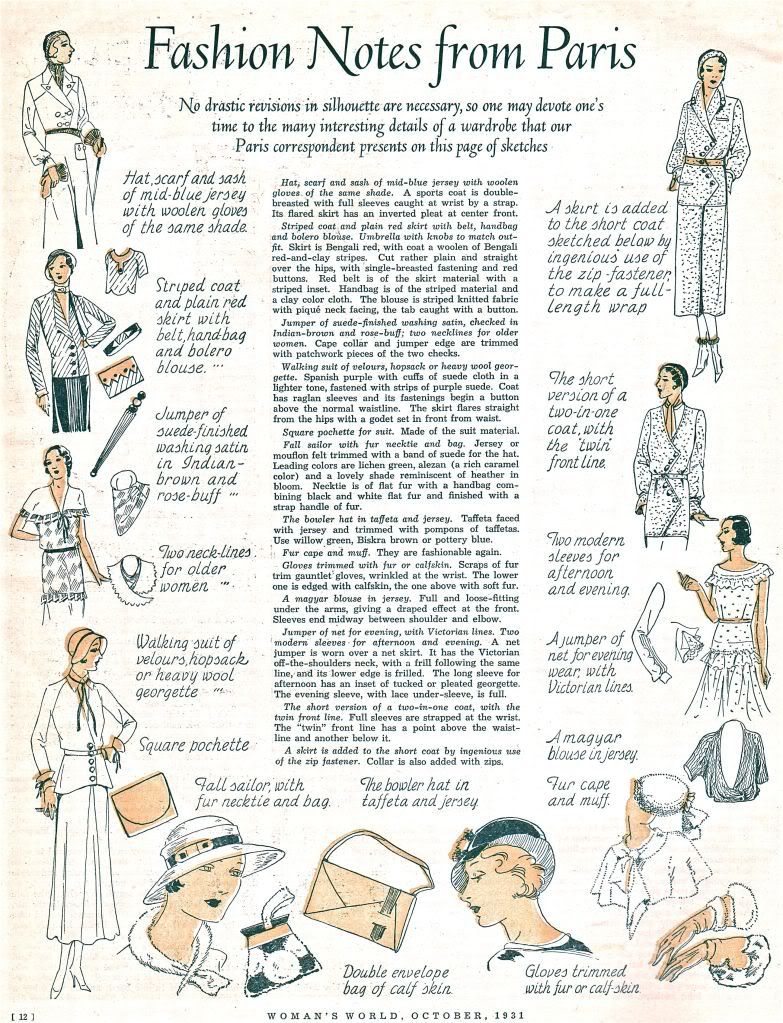
Fashion Notes from Paris - 1931

Fashion Notes from Paris for the stylish woman in 1931. It's good to know that "No drastic revisions in silhouette are necessary, so one may devote one's time to the many interesting details of a wardrobe..."
It's interesting just how important the Paris influence was. You needed to pay attention to color choices, fabric choices, and make sure everything matched.
Some of those important details included; a Square Pochette to cary with your Walking Suit, two neck-line collars for older women, but apparently a fur necktie could be worn by younger gals. In fact she could wear a fur cape and muff and a bowler hat if it was made in taffeta and jersey. And don't miss the "twin" front line jacket that has a collar and skirt added by zippers to make a "full length wrap".
Some of these would dress up a wardrobe today!


Monday, October 15, 2012

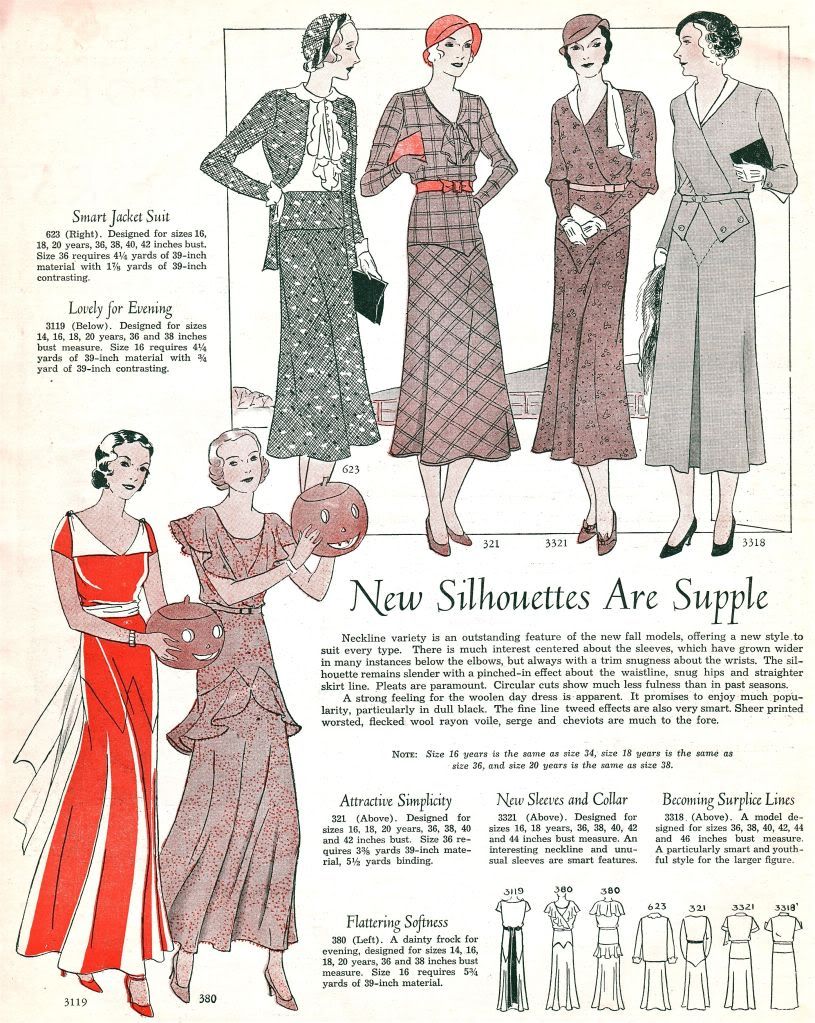
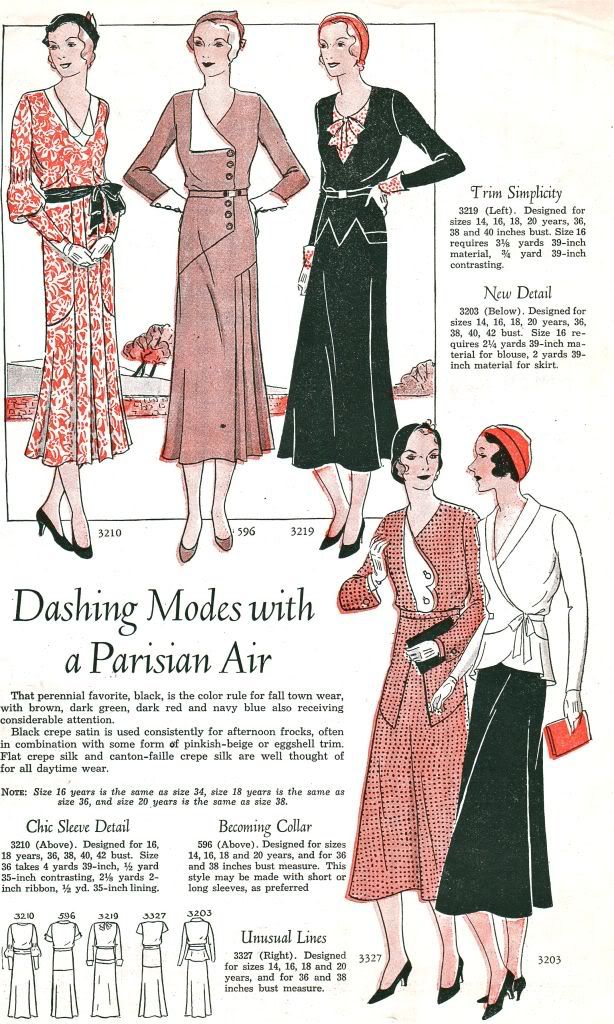
Supple Silhouettes and Dashing Modes - Dresses from 1931

This fall Woman's World magazine from 1931 points out that "A strong feeling for the woolen day dress is apparent."
"That perennial favorite, black, is the color rule for fall town wear, with brown, dark green, dark red and navy blue also receiving considerable attention."
Don't miss that these were patterns for you to sew, pretty advanced stuff. But the patterns were only 15¢,


Sunday, October 14, 2012

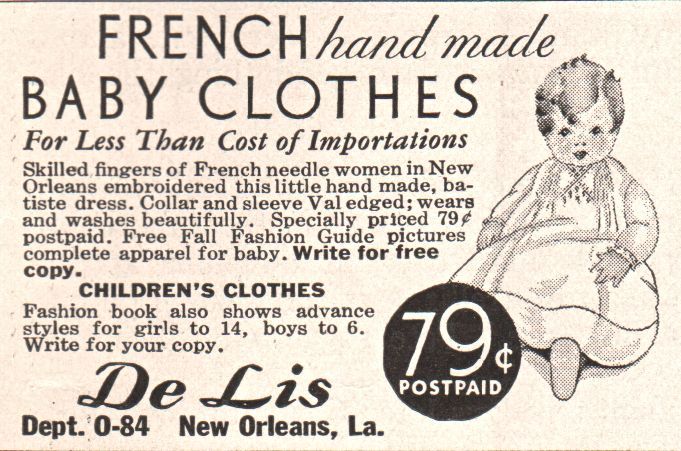
French Hand Made Baby Clothes for 79¢ - 1934

From the McCall Magazine in 1934 we have this ad, hand made baby clothes made by French ladies in New Orleans. Of course it was a come on to get you the catalog, but I have this image of low paid women doing this sort of piecework. And taking the time to do a lovely job. For a small cut of that 79¢.